




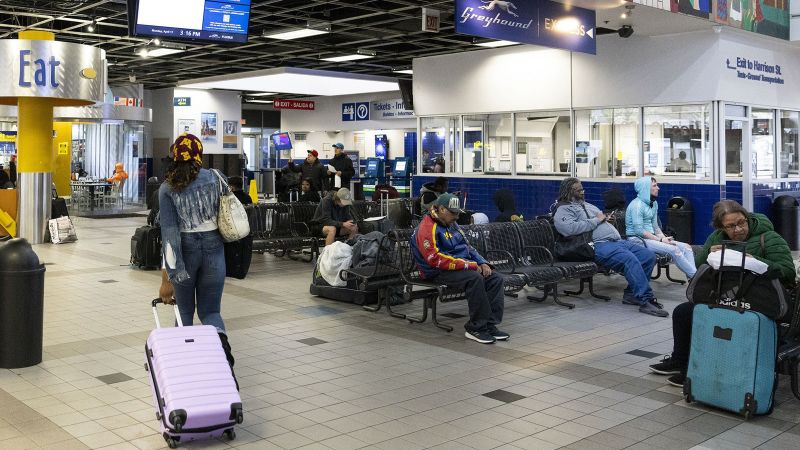
Chicago, America’s third-biggest city, is on the verge of losing its only intercity bus terminal, jeopardizing access for many low-income, elderly and minority travelers with few other transportation options. It’s part of a nationwide trend.
Greyhound’s lease for its terminal in Chicago expires next month. Not only would that mean Greyhound could leave the city, but FlixBus, Barons, Burlington Trailways and other lines that also operate from the terminal could be forced to leave as well. A representative for Greyhound told CNN that there are no proposals for a lease extension. The city, which regulates curbside pickup and drop-off locations, told CNN that it is looking for alternative options for facilities. Both Greyhound and city leaders say they are committed to finding a solution.
“Intercity bus service is critically important for so many people,” said Chicago Alderman Carlos Ramirez-Rosa, who has worked to save the station.
If the terminal closes, Chicago will be the single largest city in the Northern Hemisphere without an intercity bus terminal, according to DePaul University professor Joseph Schwieterman and researchers at the school’s Chaddick Institute of Metropolitan Development.
The terminal serves more than 500,000 passengers annually, the Chaddick Institute estimates. Although a broad range of people take intercity buses, 73% of Greyhound passengers in Chicago earn less than $50,000 annually and more than half are Black, according to the company. Roughly three-quarters are minority riders.
Allen James Henry, Jr. arrived in Chicago last week by bus from Sikeston, Missouri, a small town about 150 miles south of St. Louis. The Chicago terminal gave him a place to wait during a five-hour layover before another bus to Iowa. Then it was off to Denver. To him, the station isn’t just a place to rest – it’s a matter of dignity.
Potentially being forced to wait on the street for a long layover, he said, is “treating people who ride like they don’t matter.”
“This bus station needs to be here,” Henry Jr. said.
Greyhound and other lines with service in Chicago are part of a web of routes that allow passengers to travel between several thousand stops with a single bus ticket.
The closure threatens to unravel the comprehensive system of connected bus routes, resulting in service cuts for routes that require transfers in Chicago, DePaul’s Chaddick Institute researchers say.
Curbside service also can’t replace a dedicated terminal for buses going in and out of Chicago. Curbside carriers like Megabus usually only operate between major cities and typically do not offer routes with transfers.
Without an indoor terminal, travelers can’t use the bathroom, stay out of Chicago’s notoriously harsh winter weather or get something to eat while they wait. People transferring late at night or early in the morning, sometimes with long layovers, would have no place to safely wait.
Buses are also often the only way to get to smaller towns without train stations or airports.
Max Kay rides the bus from Chicago to Davenport, Iowa, to visit his girlfriend. A plane to the closest airport to Davenport — across the Mississippi in Moline, Illinois — would cost two to four times as much as a bus ticket. And he would still have to get across the river to Davenport once he landed.
“I guess I’d have to take the bus (even if the bus station closes) but I’d much rather have this,” Kay said. “Here you have a place to sit down, you have vending machines.”
Transportation, environmental, reproductive health, disability and other advocates in Chicago have been sounding the alarm about the risks of the city losing its terminal.
“Failing to come to a workable solution for the intercity bus terminal would directly harm thousands of people traveling to, from and through Chicago daily – and would be disproportionately placed on the most vulnerable people in our community,” a group of advocates wrote in an open letter last week.
A closure in Chicago would accelerate the crisis in intercity bus service in the United States.
Intercity buses carry an estimated 60 million people annually — twice the number of people who take Amtrak every year — but companies have cut service and closed terminals in recent decades. Cities lost nearly one-third of intercity bus service between 1960 and 1980 and more than half of the remaining service between 1980 and 2006, according to Chaddick Institute research.
Houston, Philadelphia, Cincinnati, Tampa, Louisville, Charlottesville, Portland, Oregon, and other downtown bus depots have shuttered in recent years. Greyhound and other carriers have relocated their stops far away from city centers, which are often inaccessible by public transit, switched to curbside service or eliminated routes altogether.
In Philadelphia, a Greyhound terminal closure and switch to curbside service turned into a “municipal disgrace,”with people waiting hours sitting on their suitcases and the sidewalk, and intercity bus lines idling in the dedicated bus lane for Philadelphia’s local buses, clogging up the street, a columnist for the Philadelphia Inquirer described.
The threat of a closure has reached a stress point in Chicago because Greyhound, the largest intercity carrier in the United States, no longer owns its terminals in the city and dozens of others.
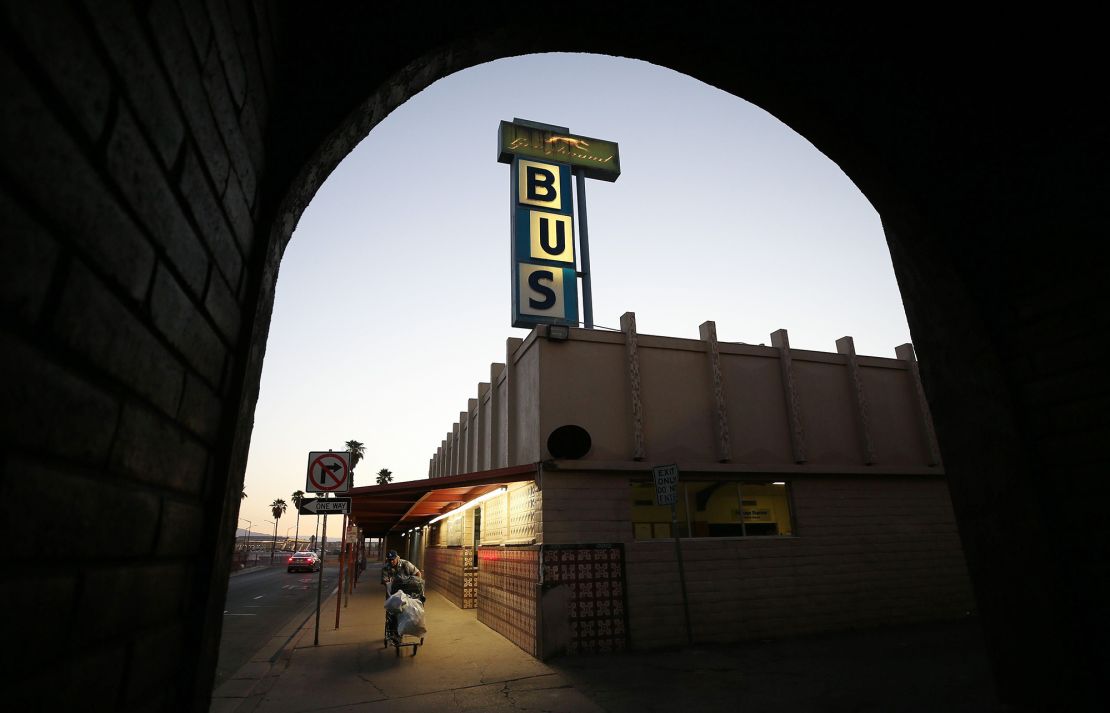
Greyhound, owned by German company Flix Mobility (which also owns FlixBus), has sold its terminals to investors for lucrative redevelopment in recent years, including dozens to investment firm Alden Global Capital.
Alden is best known for buying up local newspapers like The Chicago Tribune, New York Daily News and The Baltimore Sun, cutting staff, and selling some of their downtown buildings. Last year, a subsidiary of Alden, Twenty Lake Holdings, purchased 33 Greyhound stations for $140 million.
“Intercity bus services, including Greyhound, are vital to the Chicago community, and our top priority is to ensure uninterrupted service,” the Flix spokesperson said. “The Mayor’s office has been helping us to identify a suitable downtown location for pick-ups and drop-offs. We are encouraged by their efforts.”
In a statement to CNN, Chicago chief operating officer John Roberson said the city has looked at different options for intercity bus services and passengers. “It should be noted that Greyhound has an option to renew its lease at its current Harrison Street location under the same terms and conditions that it currently operates under,” he said. (Greyhound told CNN that Alden has not responded to such a proposal. Twenty Lake Holdings did not respond to CNN’s request for comment for this article.)
Some transit advocates and political leaders say intercity buses should be treated similarly to a public utility. They want states and the federal government to step in and play a larger role in supporting the bus network.
Local, state and the federal agencies have underinvested in intercity bus travel and relied on private companies to provide an essential public service for mostly low-income passengers, those advocates say. Some cities have been hostile to intercity buses and blocked efforts to relocate terminals.
“The station crisis is partly attributable to the low priority given to intercity bus travel by our state government,” DePaul’s Chaddick Institute researchers said in a May report.
In Chicago, advocates are calling for a publicly owned bus terminal connecting to local transit or Amtrak. Milwaukee and Boston, for example, have municipal intercity bus terminals located next to train stations.
One promising model is in Atlanta, where Greyhound opened a new 14,000 square-foot dedicated terminal this year with financial support from the state and federal governments. The station is used by other intercity bus operators and is near public transit.
Chicago Alderman Ramirez-Rosa said that the ultimate goal should be a public intercity bus terminal.
In European cities, he has visited intercity bus terminals that feel like “first-world airports.”
“The US has a lot of catching up to do,” Ramirez-Rosa said.
Read the full article here