




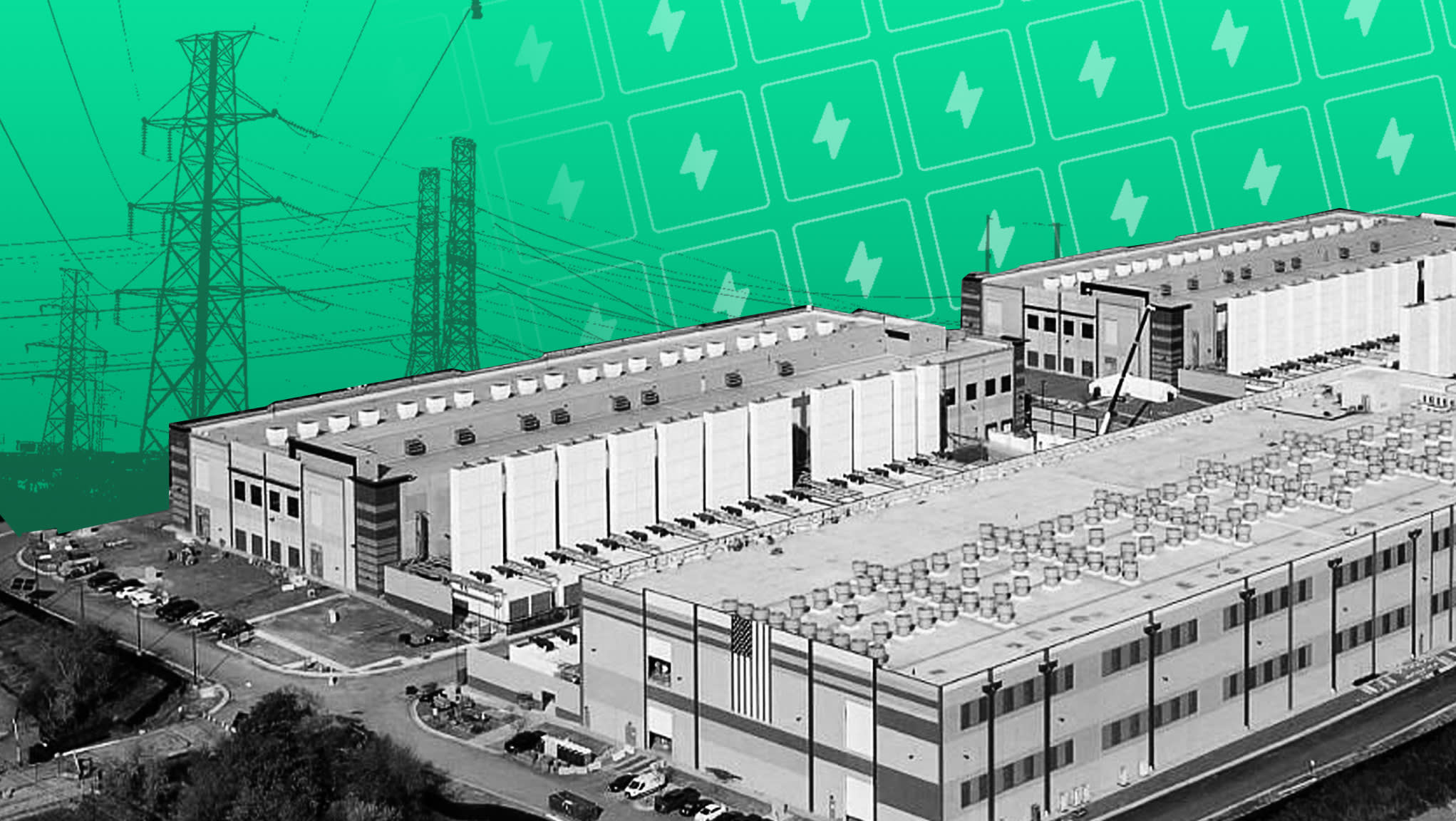
Many utility companies are pinning their short-term hopes on “demand response” solutions that require companies to curtail activity at peak times.
AI model builders typically run data centres at full capacity during “training runs” — where they feed LLMs with vast amounts of data to improve accuracy. These rises in activity can clash with consumption from other customers — including households — during peak usage, increasing the risk of blackouts.
Companies including OpenAI have also asked US regulators to speed up interconnection requests for flexible data centres, arguing that it will help “reduce costs” for all users.
“We have to get smarter about using unused capacity on the grid,” said Daniel Eggers, executive vice-president at Constellation, a power company that supplies 2mn US homes and businesses.
Researchers at Duke University said earlier this year that if data centre operators could restrict their consumption 0.25 per cent of the time, the grid could accommodate about 76GW of additional demand. They cautioned that this would not replace the need to build new capacity.
Brandon Oyer, head of energy and water for the Americas at Amazon Web Services, said the company could tolerate some curtailment on a temporary basis, but did not consider it a “smart investment” to do so for a prolonged period of time. “Some customers might be able to tolerate that. Some customers might not. It’s going to be a very nuanced decision.”
A white-knuckle ride
The concern for hyperscalers is that this patchwork of measures will not be enough to power data centres coming online over the next few years.
In this scenario, a raft of projects will no longer be viable because they cannot meet contractual commitments. Others will have to simply wait for upgrades to the electricity grid and the construction of new generation capacity to be completed.
In a race between global superpowers, AI could be slowed down by decades old grid infrastructure and a failure to provide adequate capacity.
For some, the power crunch eases concerns of overbuild. For tech companies and the Trump administration, it may undermine billions of dollars in investment.
“We may not get all this done in the timeframe that hyperscalers would like . . . and they won’t be able to interconnect until we’ve got the resources to meet them,” said Nerc’s Robb. “It’s going to be a white-knuckle ride.”
Read the full article here