




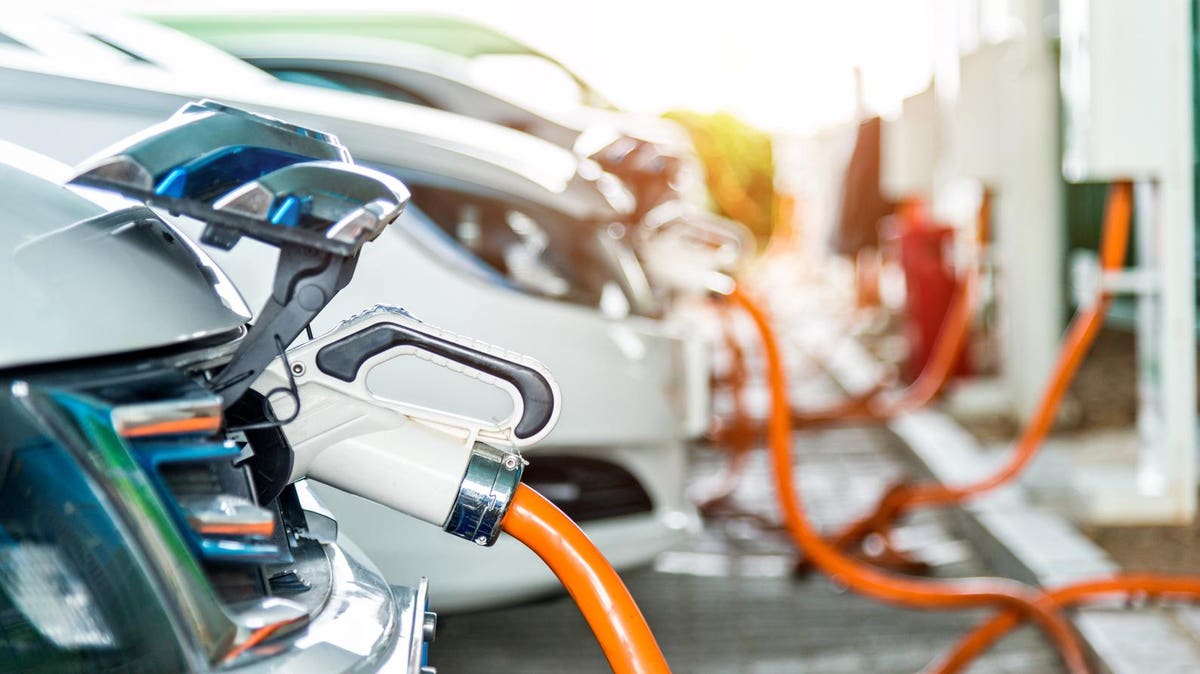
Most major automakers have followed Tesla’s lead into the world of electric vehicles, probably with more to come. California has banned internal combustion engines, effective in 2035. Assuming these trends continue, they will ripple into how developers build commercial real estate projects and how owners will manage and operate them if they want to stay competitive.
Anthony S. Wexler, an engineering and air quality professor at the University of California, Davis, is at the forefront of development and use of electric vehicles. He has given a lot of thought to how they will fit into the built environment as it changes over time.
Wexler says owners of apartment and condominium buildings will feel increasing pressure to offer charging services in their garages—and not just on a centralized pay-as-you-go basis, as we are already starting to see. Instead, apartment dwellers, especially at the higher end of the market, will soon demand the ability to charge their cars directly in the parking spots they would otherwise occupy. This avoids the friction, complexity, and headaches of multiple trips down to the garage. Instead, it lets any owner easily charge their car overnight with no extra trouble.
By cutting out an outside commercial charging station, the electric car owner can save 50% or more of the cost for the same electricity, Wexler says. As the cost of charging equipment continues to decline, he said, it will become more and more practical to distribute that equipment widely throughout a garage. Expect to see it in the coming few years.
Homeowners who buy electric cars will have much the same agenda, again benefiting from the decreasing costs of charging stations and the savings over buying electricity at a commercial charging station. In some parts of the country, homeowners can also install solar panels, taking power from the sun and feeding it straight into electric cars. They might even sell excess power back to the electric utility, depending on state law. That is already happening now.
Looking ahead, Wexler predicts that the batteries in electric vehicles could play a new role in the electric grid. Today a typical Tesla can store 75 kilowatt hours of electricity, he said. That’s enough to power a typical middle-class house for a bit more than three days. Homeowners can use their electric vehicles in place of backup generators and the battery wall installations that occasionally appear in houses with solar cells. Wexler also notes that electric cars have resale value, whereas battery walls do not.
As electric vehicles become more widespread and their batteries even more capacious, Wexler also predicted that those same electric vehicles will themselves become part of the electric grid by releasing power back into the grid when needed. They could replace traditional “peaker” power stations, the inefficient but powerful generators that produce power quickly when needed at peak times. Widespread use of electric vehicles as part of the grid could also reduce the need for utility-level battery storage facilities.
As a variation, electric vehicles parked in or near any building could also be used as a backup power source for the building itself. Vehicle owners could easily sign up to provide that service. From building ownership’s perspective, one could convert an expensive amenity into a valuable building system. Today’s software systems would have no problem doing the bookkeeping.
Any expanded use of electric vehicles is not without its challenges. Originally it was assumed that electric vehicle owners could charge their vehicles at night, when power rates and overall consumption are lower. The proliferation of electric vehicles has started to change that calculus. Instead, electric vehicle charging software is starting to watch power rates as they fluctuate during the day, drawing power whenever rates are low, which will no longer necessarily happen late at night, Wexler said. Electric vehicle owners may find the best time to charge is sometimes mid-day, when solar generation is peaking—a trend that will help incentivize office and retail building owners to install charging equipment for employees working in the building during the day.
As electric vehicles continue to develop, Wexler warned, the marketplace may shift in an entirely different direction than the installation of chargers for everyone as suggested above. Instead, he said, we may end up seeing a huge fundamental shift away from privately owned vehicles of any kind in favor of shared electric vehicles like the bikeshare programs that have become so popular in many cities.
If that happens, Wexler said, whoever provides the shared electric vehicles will handle charging centrally. And large parking facilities for private vehicles may become a thing of the past. Owners of parking structures may need to think about repurposing those buildings. Sloped floors may make that particularly difficult or impossible. Thus, anyone building a parking structure today may want to look ahead to a time when the parking structure will need to become something else, something that sloped floors may exclude.
One way or another, the roll-out of electric vehicles could have major impacts on how we develop and use real estate.
Read the full article here