




By Jamie McGeever
ORLANDO, Florida (Reuters) – While exceptions prove the rule, conflagrations and war in the Middle East have for 20 years rarely caused global investors to de-risk or rethink their strategies – a thesis that will be tested once again this time around.
As long as these conflicts stay regional and don’t draw in multiple other countries, initial “safe haven” investment flows have been short-lived. While the human tragedy dominates the broader global news agenda, its hold on global markets has typically loosened pretty quickly.
This is particularly true of the Israel-Palestinian conflict, which has had several flashpoints over the decades that have threatened to spill beyond borders.
As often, this month’s violent shock and potential for a wider conflict adds significant financial risk – most notably via energy prices that feed off the region’s pivotal oil- and gas-producing role. But overarching drivers like the global economic cycle and U.S. monetary policy usually hold sway.
Three episodes in the last 20 years are typically cited as examples of what might play out this time: the Lebanon War in 2006 and the Gaza Wars of 2008-09 and 2014. None saw a lasting “flight to safety” from investors.
Even during the most serious of those conflicts in 2006, the broad market impact didn’t really endorse a headlong “safety” playbook – gold and market volatility fell, and even oil was lower at the end of the conflict than the start.
With thousands of civilians on both sides already dead and Israel preparing a ground invasion of Gaza following Hamas’s Oct. 7 attack, investors appear mindful of that pattern. Stocks are higher than they were on Oct. 6 and sovereign bonds that often act as a haven are lower.
Analysts at Barclays reckon markets’ reaction has so far been “measured” and the overall fallout “comparatively mild,” indicating that the global impact should “remain limited.”
Deutsche Bank’s Jim Reid acknowledges that markets may be in “a very dangerous and delicate holding pattern” while watching events unfold, but says investors are assessing that risk “session by session … rather than having any strategic sense of where things are heading.”
KEEP CALM, CARRY ON?
Gold has certainly moved and is at a three-month high, up 7% from Oct. 6. But history suggests it may not last long.
In the 34-day war between Israel and Lebanon in 2006, gold spiked 5% in the first week to $675 an ounce from $640, but when the war ended it was actually lower at $630 per ounce.
One notable parallel for gold between now and then is the relative high opportunity cost between being parked there and simply holding cash. Benchmark U.S. interest rates then were 5.25%, similar to today’s 5.25%-5.50% range, making it extremely expensive to hold a non-interest-bearing asset like gold.
Inflation-adjusted real rates matter more when deciding whether to hold gold. They were around 1.5% in mid-2006 and are around 2.25% today – both suggesting cash is the better investment.
The dollar, Swiss franc and Japanese yen – the world’s three traditional “safe-haven” currencies – didn’t move much and ended up drifting lower over the course of the war. Treasuries rose, but it is worth noting that bonds were in a multi-decade bull run in the mid-2000s – a very different picture to today.
The 2014 Gaza War lasted about six weeks and saw Israeli forces cross the border into Gaza. Gold immediately spiked 2% to a then four-month high of $1,345 per ounce, but at the end of the conflict it was lower at $1,280 per ounce.
The dollar rose, but that was the onset of a 25% mega-rally over the subsequent eight months driven by strong U.S. economic growth and expectations of tighter U.S. monetary policy.
The 2008-09 Gaza War also echoes today’s situation and saw Israeli forces cross into Palestinian territory. But at that time financial markets, asset allocation, and investor behavior were driven solely by the intensely volatile ebb and flow of the Great Financial Crisis.
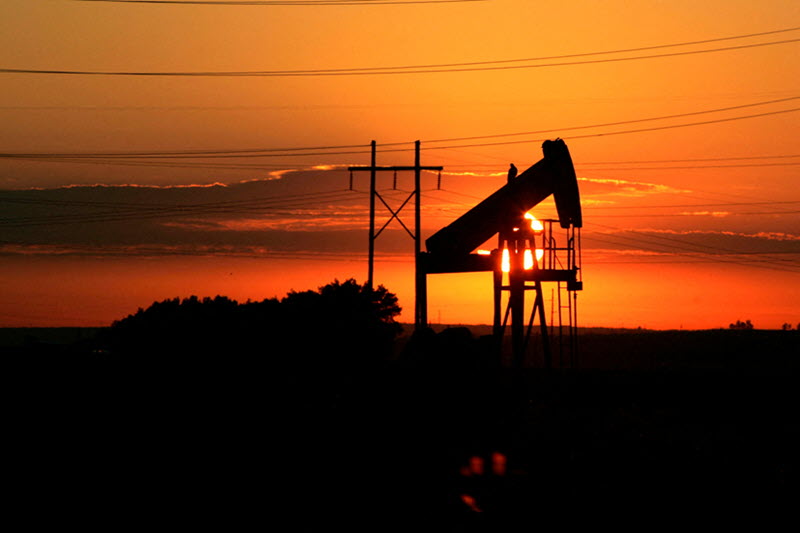
AND WHAT OF OIL?
In late 2008 did initially spike sharply to around $50 a barrel from around $35 a barrel, but by the end of the three-week conflict it was back down around $32 per barrel.
Similarly in 2006 it rose to a then record high above $78 a barrel from around $73 per barrel, but by the end of the war it was back at $73. And over the course of the 2014 Gaza War Brent crude fell around $10 to $93 a barrel.
So unless there is a dramatic escalation in the current conflict with unforeseen consequences, investors might be tempted to just sit tight and follow the path they had already set for themselves.
But as the maxim goes – fail to prepare, prepare to fail. Hedging may mean missing out on near-term upside, but mitigating downside risks is always prudent.
“Try not hedging your energy exposure as a firm now and see what happens if a larger war breaks out. Most people in financial markets know nothing about geopolitics, so it’s easy for them to ignore it,” said Michael Every, global strategist at Rabobank.
(The opinions expressed here are those of the author, a columnist for Reuters)
Read the full article here