




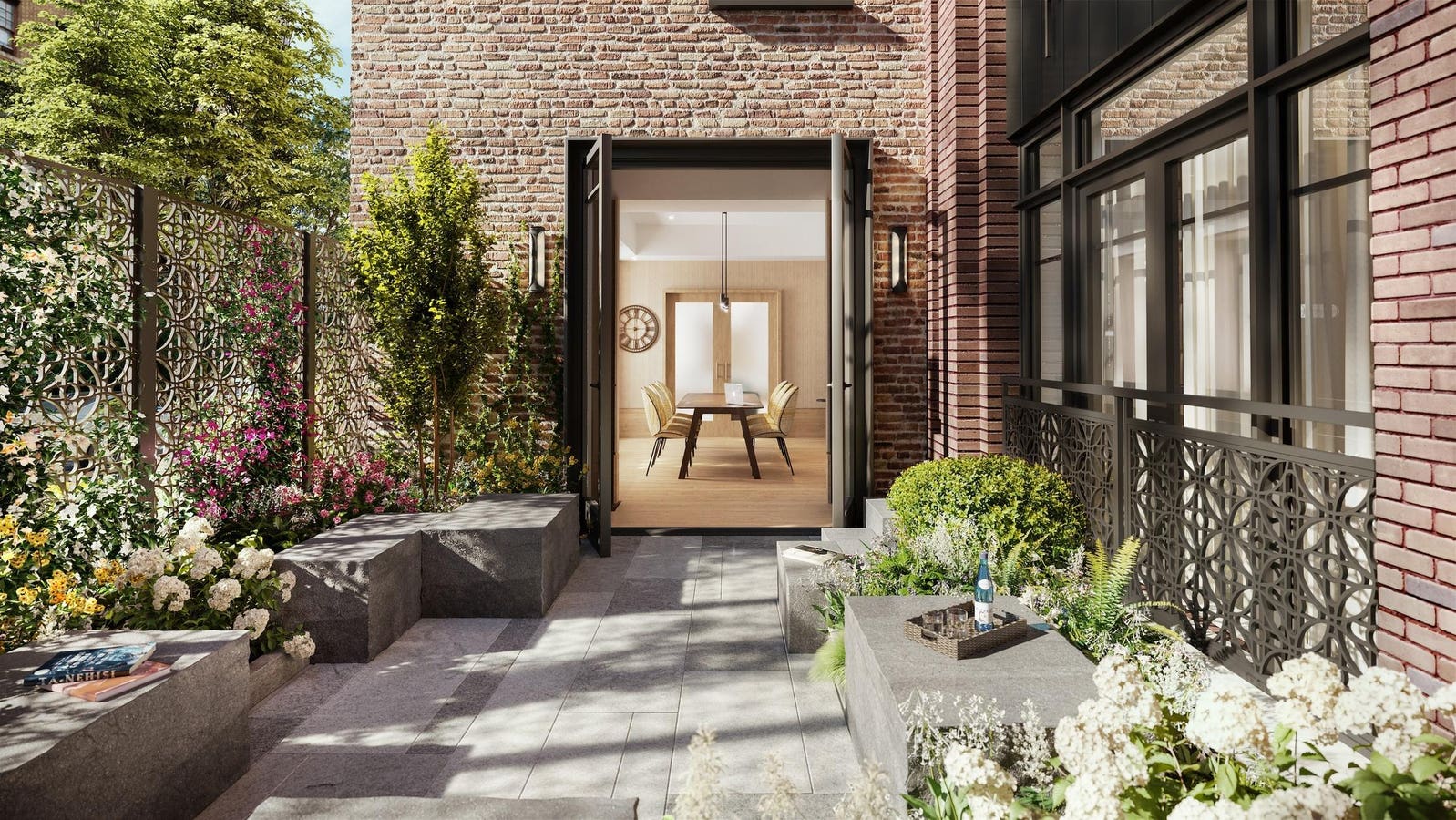
Our major cities have always been more “urban” than “jungle” when it comes to incorporating nature into the buildings where residents live. Except for a fortunate few, the average New Yorker, Chicagoan or Angeleno needs to leave home to enjoy a garden oasis in the city. That has been slowly changing in recent years – especially since Covid-19 made the benefits of natural outdoor spaces so painfully clear.
Architects, builders and developers are responding with more gardens in their condo and apartment projects, but it’s not easily achieved, given the high cost of land in many cities and competing demands for more housing. Each unit being built should each have its own plantable outdoor space, or at least access to a shared on-site garden, as one of the lessons from the pandemic demonstrated, but that doesn’t always happen. It’s a social benefit that we’re seeing this trend increase, given all of the competing challenges.
Mandates
Open spaces are required by some local governments. Los Angeles-based architect Dean Larkin is incorporating this fact into his latest West Hollywood project. Each unit built in the dense, compact city on the westside of sprawling Los Angeles County is required to have a minimum of 120 square feet of private open space – and a third of it has to be open to the sky, he shared in an email.
There are requirements for common open space too, based on the project’s size, the architect added. “For our seven-unit buildings, there was a requirement of 500 square feet.” In addition to balconies with space for residents’ plants, Larkin created courtyards along the project’s shared property lines, added tree wells to the parking areas, and created a “pocket park” to stop and have a conversation on what would normally be just a sidewalk in front of the buildings.
It’s not just West Hollywood with these open space requirements, Larkin commented. Beverly Hills, Santa Monica and the City of Los Angeles all have requirements around minimum outdoor space. It’s something he’s entirely in favor of, he shared: “A connection to outdoor living is the very soul of the southern California living experience and multi family living should be no exception!”
Increased Demand
Stephen Glascock, Chairman of New York-based developer Anbau, would probably agree, though the Big Apple doesn’t offer a year-round outdoor living climate like Larkin’s Los Angeles. Glascock observed that ”Post-COVID there is a greater desire to connect with nature” and an “awareness that the outdoors presents a safe space for human connection, in addition to the happiness and oxygen byproducts of living with plants.” Private outdoor space is a commonly requested feature in home searches, he added to his emailed observations.
Nature Benefits
“Incorporating greenery, especially in a dense urban city, has not only an impact on the individual, but also a lasting impact on the surrounding environment,” Glascock wrote. There is extensive evidence of the physical and mental health benefits of nature, (from improved air quality for respiratory health to stress reduction, for example), but the developer cited another: “One of the prevalent factors that can help mitigate climate change is the reduction of the heat island effect (according to the EPA), which is the phenomenon where the temperature in cities is higher than it should be because elements like pavement or cement absorb the heat in dense areas.” One of the best ways to reduce that effect is to add vegetation. Courtyard, roof, balcony and terrace gardens all help. And they make living in buildings that have them healthier and more enjoyable.
In its latest condo project, Flatiron House, Anbau created balcony gardens for the majority of the building’s residents. “We wanted to make sure that residents could experience a connection to the outdoors within their own home,” Glascock shared. “People like being able to grow their own herbs and even some fruits right next to their kitchen.” Those units without their own balcony gardens can still access a shared garden courtyard for the building and planted loggias.
Post-Pandemic
Private gardens are a specialty for New York-based horticulturalist Mark Davies. He creates them on balconies, terraces, rooftops and in tucked-away courtyards for the city’s premium condos and co-ops. Some are for individual units. Some are shared by all of the residents. “These buildings are keen to have common roof terraces as amenities for their tenants,” he noted in an email.
Demand dipped during the height of the pandemic as New Yorkers fled to their second homes away from the city, but demand is back up 25% to 30% over previous years, Davies shared. “Now that we seem to be ‘post-pandemic,’ there is a wish to have more outdoor areas with a move towards having your own individual space. As it is safer for people to gather outdoors this become more desirable,” he pointed out. (Some of the business increase is being driven by people renovating rather than moving or reacting to Covid, he theorized.)
One decidedly pandemic-related real estate trend the New York-based horticulturalist observed has been the impact of remote work on Manhattan’s office market. “The Adams administration has been working to change zoning to allow vacant office buildings to be repurposed for housing. Along with this comes the need for outdoor amenities,” he commented. When buildings complete this and other local policy-driven updates, buildings that didn’t have outdoor space are considering adding it, Davies said. That’s a benefit for their residents and the rest of the city.
Is your local government mandating outdoor space for your residential buildings? It’s worth bringing it up to your city’s or county’s representatives if they’re not. Your future home space could be the beneficiary.
Read the full article here