




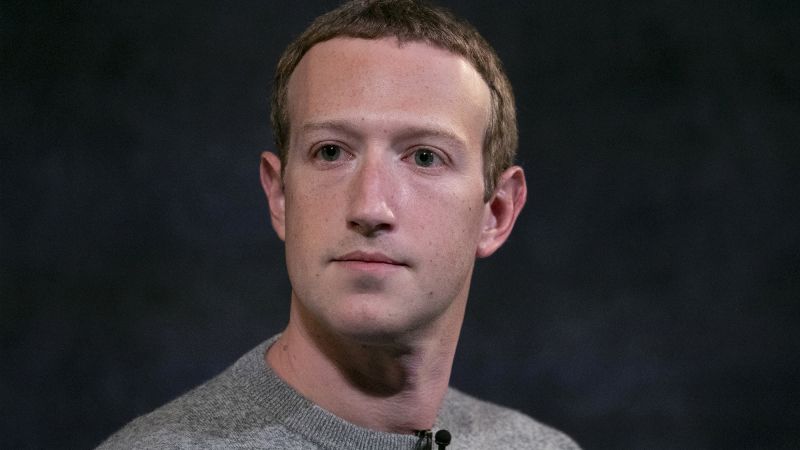
Meta CEO Mark Zuckerberg has personally and repeatedly thwarted initiatives meant to improve the well-being of teens on Facebook and Instagram, at times directly overruling some of his most senior lieutenants, according to internal communications made public as part of an ongoing lawsuit against the company.
The newly unsealed communications in the lawsuit — filed originally by Massachusetts last month in a state court — allegedly show how Zuckerberg ignored or shut down top executives, including Instagram CEO Adam Mosseri and President of Global Affairs Nick Clegg, who had asked Zuckerberg to do more to protect the more than 33 million teens who use Instagram in the United States.
The disclosures highlight Zuckerberg’s sway over decisions at Meta that can affect billions of users. And they also shed light on tensions that have occasionally arisen between Zuckerberg and other Meta officials who have pushed to enhance user well-being.
Zuckerberg vetoed a 2019 proposal that would have disabled Instagram’s so-called “beauty filters,” a technology that digitally alters a user’s on-screen appearance and allegedly harms teens’ mental health by promoting unrealistic body image expectations, according to the unredacted version of the complaint filed this week by Massachusetts officials.
After sitting on the proposal for months, Zuckerberg wrote to his deputies in April 2020 asserting that there was “demand” for the filters and that he had seen “no data” suggesting the filters were harmful, according to the complaint.
Despite Zuckerberg’s conclusion, the proposal had enjoyed broad support, the lawsuit said, including from Mosseri; Instagram’s policy chief, Karina Newton; the head of Facebook, Fidji Simo, and Meta’s vice president of product design, Margaret Gould Stewart. (Simo and Mosseri had lamented at other times, according to the lawsuit, that a lack of investment in well-being initiatives meant Meta lacked “a roadmap of work that demonstrates we care about well-being.”)
Stewart had first pitched the idea to disable beauty filters, citing recommendations by academics and Meta’s outside advisors, while Newton wrote an email adding it had strong backing from departments including “comms, marketing [and] policy,” the lawsuit said.
But after Chief Technology Officer Andrew Bosworth brought the matter to Zuckerberg’s attention, Zuckerberg ultimately rejected the plan and the filters were allowed to remain, according to the complaint.
In response to the newly unsealed communications, Meta spokesman Andy Stone said such image filters are commonly used in the industry.
“While filters exist across every major social platform and smartphone camera, Meta bans those that directly promote cosmetic surgery, changes in skin color or extreme weight loss,” Stone said. “We clearly note when a filter is being used and we work to proactively review effects against these rules before they go live.”
Stone added that Meta offers 30 tools to support teens and families, including the ability to set screen-time limits and the option to remove like counts from posts. (In the unredacted portions of the complaint, the Massachusetts suit alleges that the experiment to remove like counts from posts, codenamed Project Daisy, had originally been proposed as an app-wide default but was later downgraded to an opt-in feature that is rarely used.)
At the time of the original Massachusetts lawsuit, which was one of several filed on the same day by multiple state attorneys general, Meta had said it was committed “to providing teens with safe, positive experiences” and that it was disappointed that the states had not worked with Meta to develop industry standards.
A year after the beauty filter decision, in August 2021, Clegg pressed Zuckerberg to make “additional investment to strengthen our position on wellbeing across the company,” citing a staff recommendation to address issues of addiction, self-harm and bullying, according to the complaint. By this time, the company was just weeks away from being hit with Facebook whistleblower Frances Haugen’s bombshell allegations that Instagram knew its services could be harmful to teens.
Haugen’s anonymous allegations in September jumpstarted intense scrutiny of Instagram. As Haugen revealed her identity in October, Mosseri wrote to another Meta product executive that same month in reference to Clegg’s proposal, the lawsuit said, saying he was “really worried” about well-being “but have made little progress.”
Zuckerberg allegedly remained silent on Clegg’s proposal throughout this time, prompting Clegg to reiterate his concerns to Zuckerberg in November. Finally, Zuckerberg appeared to respond through Meta’s chief financial officer, Susan Li, who “tersely respond[ed] that staffing was too ‘constrained’ to meet the request,” the lawsuit said.
Li responded similarly on Zuckerberg’s behalf after another product executive, David Ginsberg, emailed Zuckerberg in 2019 highlighting internal and external research suggesting that the company’s services were having a negative impact on people’s well-being. Ginsburg proposed hiring more engineers to build well-being tools to respond to addiction, social comparison and loneliness, but Li “responded that Meta’s leadership team declined to fund this initiative,” according to the complaint.
Zuckerberg’s rejection of opportunities to invest more heavily in well-being are reflective of his data-centric approach to management, said Arturo Bejar, the former Facebook engineering director and whistleblower who leveled his own allegations last week that Instagram has repeatedly ignored internal warnings about the app’s potential harms to teens.
Bejar, who testified to Instagram’s alleged risks before US lawmakers this week, told CNN on Wednesday he was not a part of the decision-making on beauty filters but had spoken to senior officials and others who had worked on internal research on the matter.
“My understanding was that Mark needed causal data,” Bejar said, “for you to be able to demonstrate that because somebody was using a filter, that that would have an impact on how they perceive themselves.”
“All the people that I’ve talked to internally about this were like… Mark’s level of proof, in order to be able to take the work seriously and act on it, is too high,” Bejar added. “I think it’s an impossible standard to meet.”
On Wednesday, Stone added that Meta has a “robust central team overseeing youth well-being efforts across the company, and have built technology and teams that can move quickly and efficiently to implement new improvements across specific apps.”
Other newly unveiled allegations in the complaint accuse Meta of exploiting the psychology of adolescent brains and that Zuckerberg personally established goals for the company to increase the amount of time users spend on Instagram.
A 2020 internal presentation discussed in the complaint described how Instagram meets teenagers’ desire for “novelty seeking” with “a dopamine hit” through intermittent notifications about comments, follows and other bids for attention that can convey a sense of “approval and acceptance [that] are huge rewards for teens.”
Technology advocacy groups sharply criticized Zuckerberg on Wednesday after the internal communications came to light.
“These unreacted documents prove that Mark Zuckerberg is not interested in protecting anyone’s privacy or safety. The rot goes all the way to the top,” said Sacha Haworth, executive director of the Tech Oversight Project.
And Zamaan Qureshi, co-chair of Design It For Us, a youth-led coalition pushing for product changes and regulation of social media, said the unsealed documents show that senior Meta executives sometimes confronted the same barriers that concerned rank-and-file employees did.
“Clegg’s comments follow a pattern and practice at Meta where employees repeatedly flagged under-investment in well-being tools, despite having the research,” Qureshi said. “Now we know not even senior leadership could get through to Zuckerberg.”
Read the full article here