




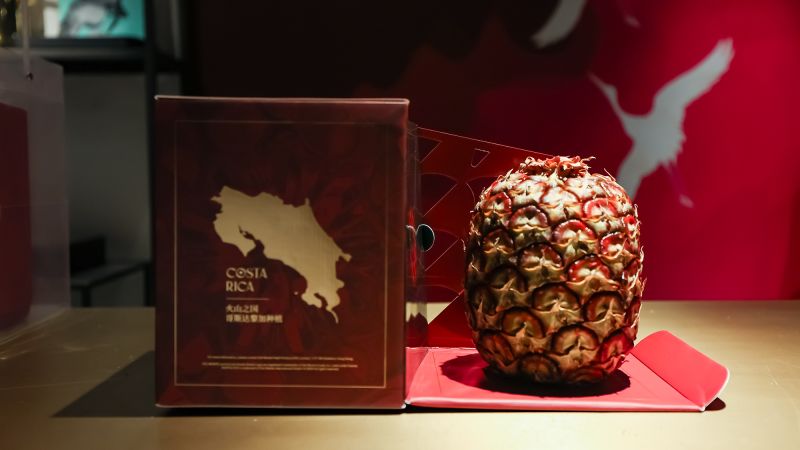
Imagine you have $400 to spend on a luxury dining experience. You might treat yourself to a tin of premium caviar, a bottle or two of very fine wine or a multi-course meal at a high-end restaurant.
Or you could blow it all on a single pineapple.
The Rubyglow pineapple –— bred for its distinctive red exterior and its sweetness — costs $395.99 at Melissa’s Produce, a California-based seller of specialty fruit and veggies. It took Del Monte, a wholesaler which sells a variety of produce but specializes in pineapple, a decade and a half to develop the red-hued fruit. A limited crop was first available in China early this year. Recently, Del Monte decided to see how the item would fare in the United States, and Melissa’s starting selling it at the astronomical price.
It may not seem like the best time to market a (very, very) expensive piece of fruit in America. It wasn’t that long ago that soaring grocery prices made headline news, stressing out consumers and stretching their budgets thin. Still nervous about inflation and worried about unemployment, many Americans are now spending less.
And yet, there’s interest in premium fruit — enough to convince Del Monte to bring the Rubyglow, which is grown in Costa Rica, stateside.
“Consumers are willing to pay for something that’s special,” said Cindy van Rijswick, fresh produce strategist for Rabobank’s global research team. When it comes to specialty produce, “there’s always a small market for higher-end restaurants, or foodies, or certain online channels,” she said.
Americans have become interested in particular for new fruit varieties in recent years, paying a premium for Honeycrisp apples, Cotton Candy grapes, Sumo Citrus and vertically-grown Japanese strawberries. Now, they are hungry for different types of fruit, and are ready to shell out for exciting new options.
But a $400 pineapple? That’s a bit rich.
When the Honeycrisp was introduced over 30 years ago, there weren’t many apple options in the supermarket.
Red Delicious, Golden Delicious and, in some areas, McIntosh apples were standard fare, recalled Jim Luby, a professor in the horticultural science department at the University of Minnesota. But that was about it. “If you didn’t go out to a local orchard, you didn’t have that many choices.”
People were hungry for more, and Honeycrisp fit the bill — sweet, crisp and novel.
“It became popular in Minnesota amongst our growers,” said Luby, who was part of the team that developed the variety. “There wasn’t that much production. So it was priced high. And yet it kept selling.”
Marketing new produce is a costly affair. Researchers have to breed and cross-breed, wait out the growing cycle, and start over if the fruit disappoints. Finding something that is both delicious and resilient enough to be commercially successful takes time, and a lot of painstaking work. Then plant scientists have to convince growers to make an investment in an unproven fruit, devoting resources that could be used for old favorites.
But the Honeycrisp helped show that the risk can be justified.
Since the apple’s success, variety in the produce section has increased. Over roughly the past decade, per capita availability — a good proxy for consumption — of higher-priced fruit, like berries, mango and avocados, has increased, according to Rabobank, which drew from USDA data. In that time, availability of cheaper fruit like apples and bananas has essentially stayed flat.
Some specialty fruits have even developed cult followings: those Cotton Candy grapes, named for their sweetness, hit the scene in 2011 and quickly became popular. Sumo Citrus, a hybrid of navel oranges, pomelos and mandarins, was more of a slow burn, but has exploded in recent years.
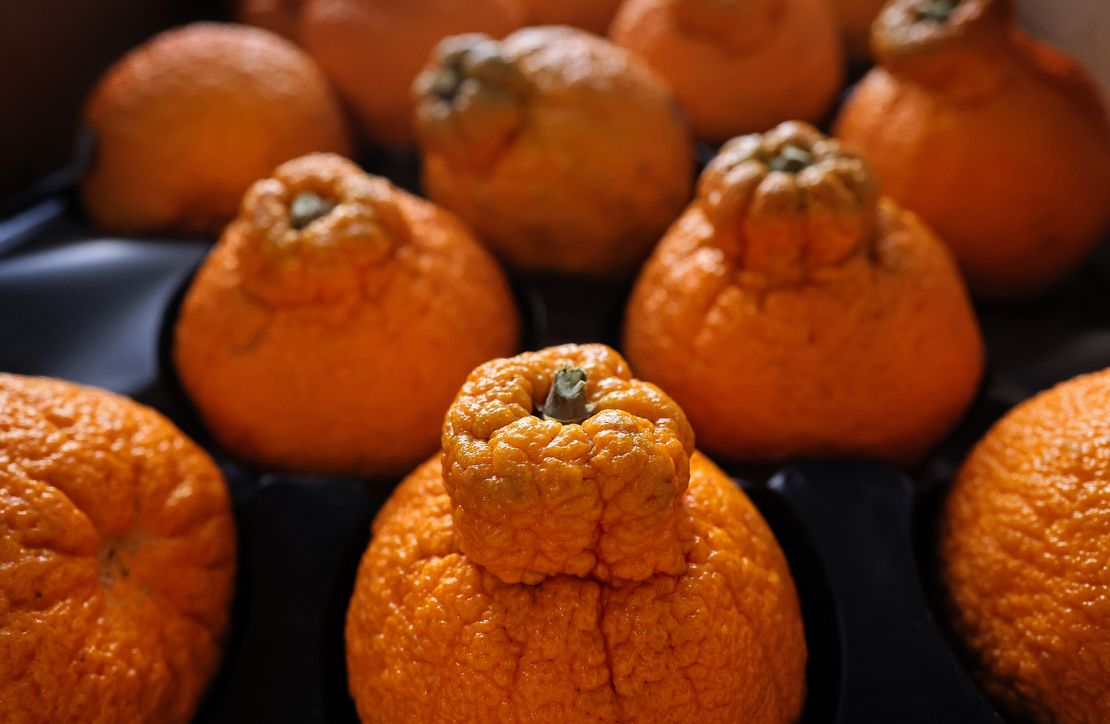
In these cases, consumers have been willing to spend a little bit more. But those items are cheap in comparison to Oishii’s specialty strawberries, grown indoors in a climate-controlled vertical farm. When its berries first became available to the public in 2018, Oishii charged $50 for a pack of eight.
Oishii is selling more than just berries: It’s selling a luxury item. The berries are packed in flat boxes that spotlight each individual fruit, more like a package for hand-crafted chocolate truffles than the mold-hiding plastic containers you see at a supermarket. Each fruit is supposed to be perfect.
“Even at $50, we had thousands of people on the waitlist constantly,” said Oishii CEO Hiroki Koga.
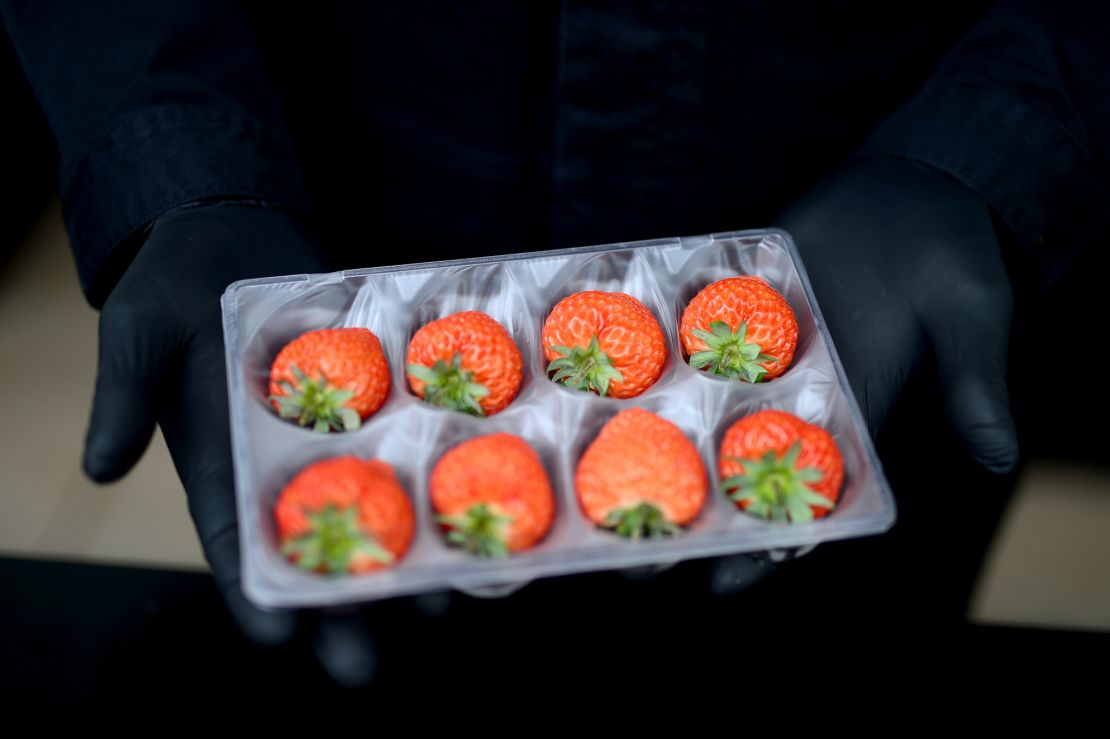
Buzzy or not, $50 for strawberries is not a sustainable price. Today, after rounds of funding and improved technology, Oishii’s products are more readily available, and much cheaper. You can get Oishii berries at mainstream grocers for around $10-$14 per pack.
Del Monte’s researchers have been coming up with different types of pineapples for years, designing proprietary fruit and often optimizing for taste. In 2020 the company launched its own pretty, giftable fruit — the Pinkglow pineapple, which has pink flesh and comes in its own special box.
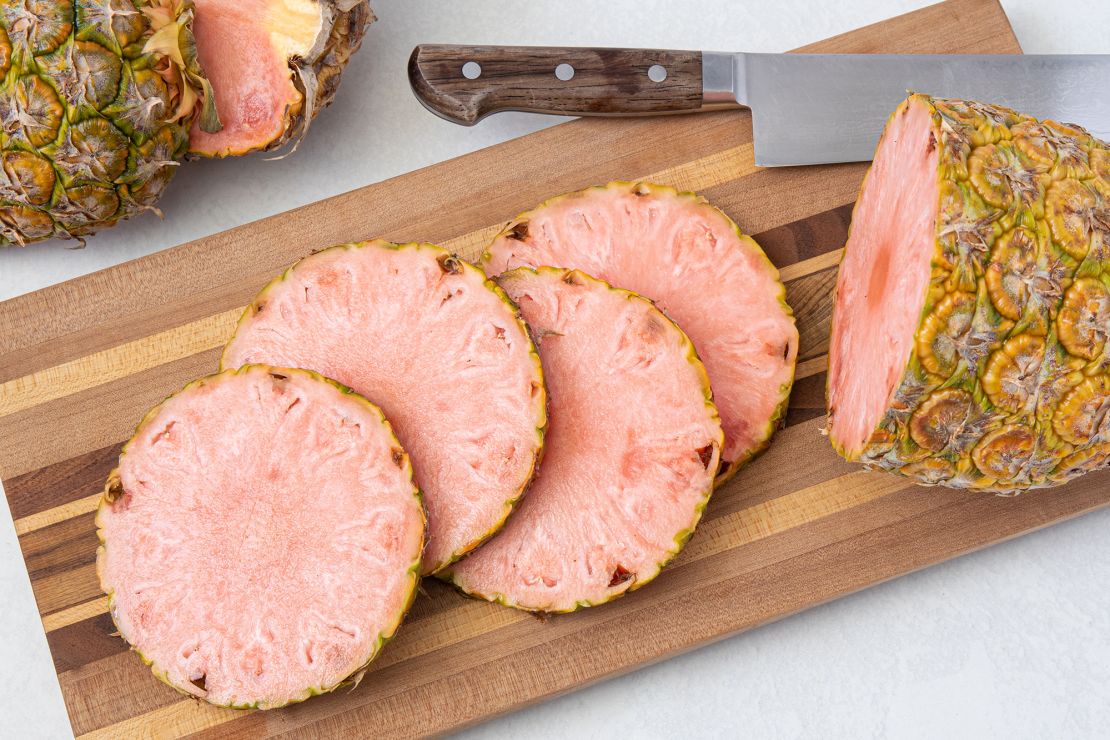
The Pinkglow was never supposed to be a grocery list staple, said Melissa Mackay, VP of marketing in North America at Del Monte. “It’s a hostess gift, it’s a Mother’s Day gift,” she said. It’s also perfect for Instagram and TikTok, where food influencers with large followings cut open the fruit, marveled at its color and shared their reviews (the verdict: very sweet).
At first, the Pinkglow was sold for about $50. Today, you can get one for far less, online between around $8 and $29 — bargain prices, relatively, but still steep for a pineapple.
If you can afford it, splurging on a pink pineapple is “permissible, because you’re investing in something that’s good for you,” said Melanie Zanoza Bartelme, associate director of Mintel Food & Drink. “It’s like people who go to Erewhon and spend almost $20 on a smoothie that a celebrity created,” she said, referring to the high-end Los Angeles grocery store known for collaborating with celebrities on pricey smoothies (like Hailey Bieber’s Strawberry Glaze Skin Smoothie, priced at $19 for a 20-ounce cup).
Still, she noted, there is a “blank space between a $16 pineapple and a $400 pineapple.”
Melissa’s Produce, which sells everything from truffles to mangosteens to kumquats, describes the Rubyglow on its website as a “rare gem” and “the pinnacle of luxury fruit,” adding that “for the gourmand, it’s an unforgettable gift.”
The pitch has had limited success. Melissa’s started with 50 pineapples, according to Robert Schueller, director of public relations at Melissa’s Produce. So far, it has sold about half that number over the course of a month, including to restaurants in Las Vegas and Southern California, which he said are using the fruit in displays.
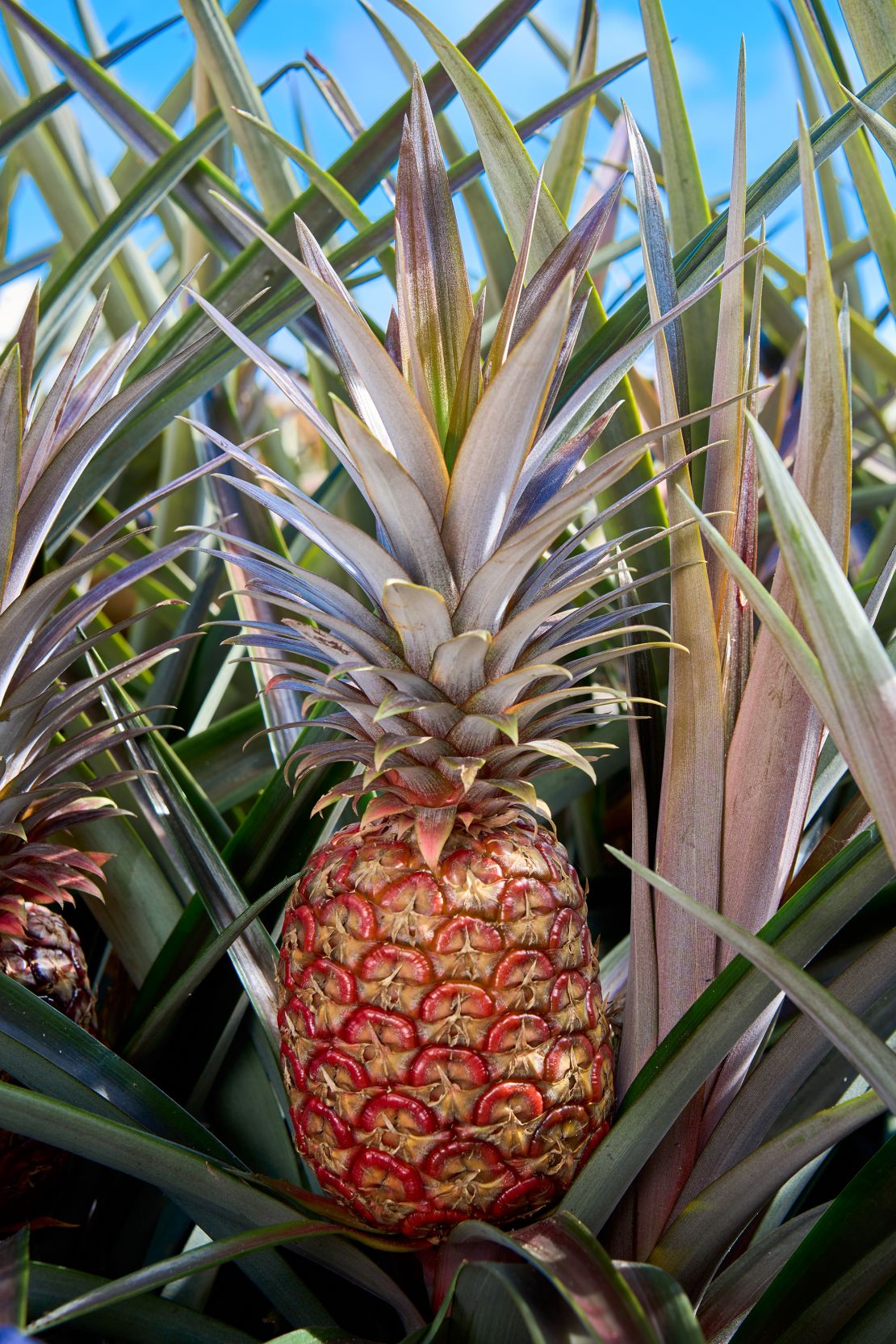
“There’s a market for this,” Schueller said. It’s just a very small, very niche market. “This is not something for everybody.”
To try to create more buzz, Melissa’s reached out to a handful of food influencers, including Bo Corley, a chef who shares recipes and other food tidbits on his social channels.
The pineapple “was absolutely delightful,” Corley said. “There’s almost like a bitter aftertaste when you eat too much pineapple,” he explained. “You don’t have that with the Rubyglow.”
But, he said, it wasn’t worth $400.
Corley can see people spending to get their hands on the Rubyglow, if not for the taste of the pineapple itself then for the wow factor of the brilliant exterior.
“I think charcuterie boards this Christmas, Thanksgiving — you’re going to see this Rubyglow as a centerpiece, especially in an affluent house,” he said. In other words, people may not spend for the taste of the pineapple, but just to show off that they have it.
Read the full article here