



Stay informed with free updates
Simply sign up to the Oil & Gas industry myFT Digest — delivered directly to your inbox.
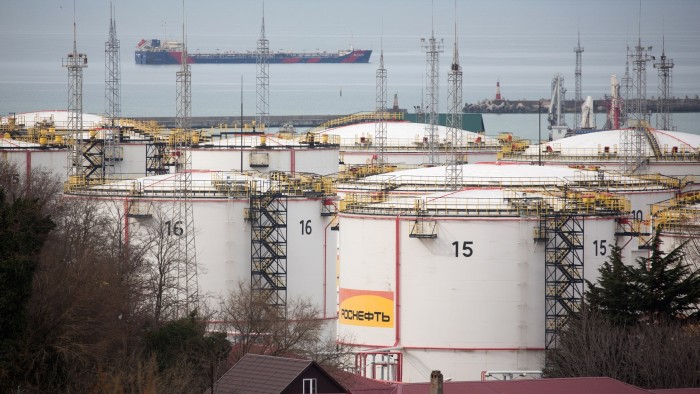
The EU has imposed sanctions on the high-profile oil trader Murtaza Lakhani for allegedly assisting Russia’s Rosneft in exporting crude and other petroleum products in breach of western restrictions.
Lakhani is the best known trader to have been targeted by Brussels since Russia’s 2022 full-scale invasion of Ukraine.
The Canadian-Pakistani businessman made his name working for commodities company Glencore in Iraq in the 1990s and later became a key player in the export of oil from the semi-autonomous Iraqi region of Kurdistan.
He founded Mercantile & Maritime Group in 2015 and later invested in state-run Rosneft’s multibillion-dollar Arctic oil project in a joint venture with energy trader Vitol.
M&M and Vitol divested their stake in the project in 2022 in response to western sanctions against Russia. At the time, M&M said it had wound down all commercial activity with Russia in compliance with the west’s restrictions.
However, Lakhani has since faced allegations that he has remained involved with other companies set up to export Russian oil following the invasion.
The Financial Times last month reported that Lakhani had been involved in the supply of Russian oil with three companies incorporated in the United Arab Emirates since 2022. At the time, Lakhani’s lawyers said he did not “own or control” any of the businesses but had “provided them with ad hoc advice and assistance”.
In its decision, published on Monday, the EU accused 63-year-old Lakhani of involvement in an economic sector that provided “a substantial source of revenue” to the Russian government.
“Through his companies, he enables shipments and export of Russia oil, notably from the Russian state-owned oil company Rosneft,” the EU said in official documents. “In particular, Murtaza Lakhani controls vessels transporting crude oil or petroleum products, originating in Russia or being exported from Russia, while practising irregular and high-risk shipping practices.”
In the same package, the EU also sanctioned Azerbaijani oil trader Etibar Eyyub and two other individuals involved in a network of companies including United Arab Emirates-registered 2Rivers Group, which was previously known as Coral Energy.
Through this network Eyyub enables the export of Russian oil, notably from Rosneft, and controls “a large proportion of the vessels in Russia’s so-called ‘shadow fleet’,” the EU said. Eyyub was sanctioned by the UK in May. Eyyub could not immediately be reached for comment.
Lakhani criticised the EU decision to sanction him. “I do not own any vessels, either directly or indirectly, and consider the basis for these measures to be unfounded,” he said in a written statement sent to the FT.
However, he also sought to distance M&M from the designation, stating that his companies were not named in the EU measures and that those businesses would continue operations as normal.
“I will be stepping down from all managerial positions within all companies owned by myself and will undertake a detailed review to ensure full compliance with all applicable regulations,” he said.
Lakhani has continued to travel to Russia since the start of the Ukraine war, regularly attending the annual St Petersburg International Economic Forum.
In a video interview on the sidelines of the event in June, Lakhani said none of his companies were currently doing business with Russia but defended Moscow’s role in the global energy system.
“I see everybody. I still talk to everybody,” he said. “This country is the largest resource country in the world. Hampering it is . . . not a long-term goal for anybody. They will always need Russia.”
Read the full article here