




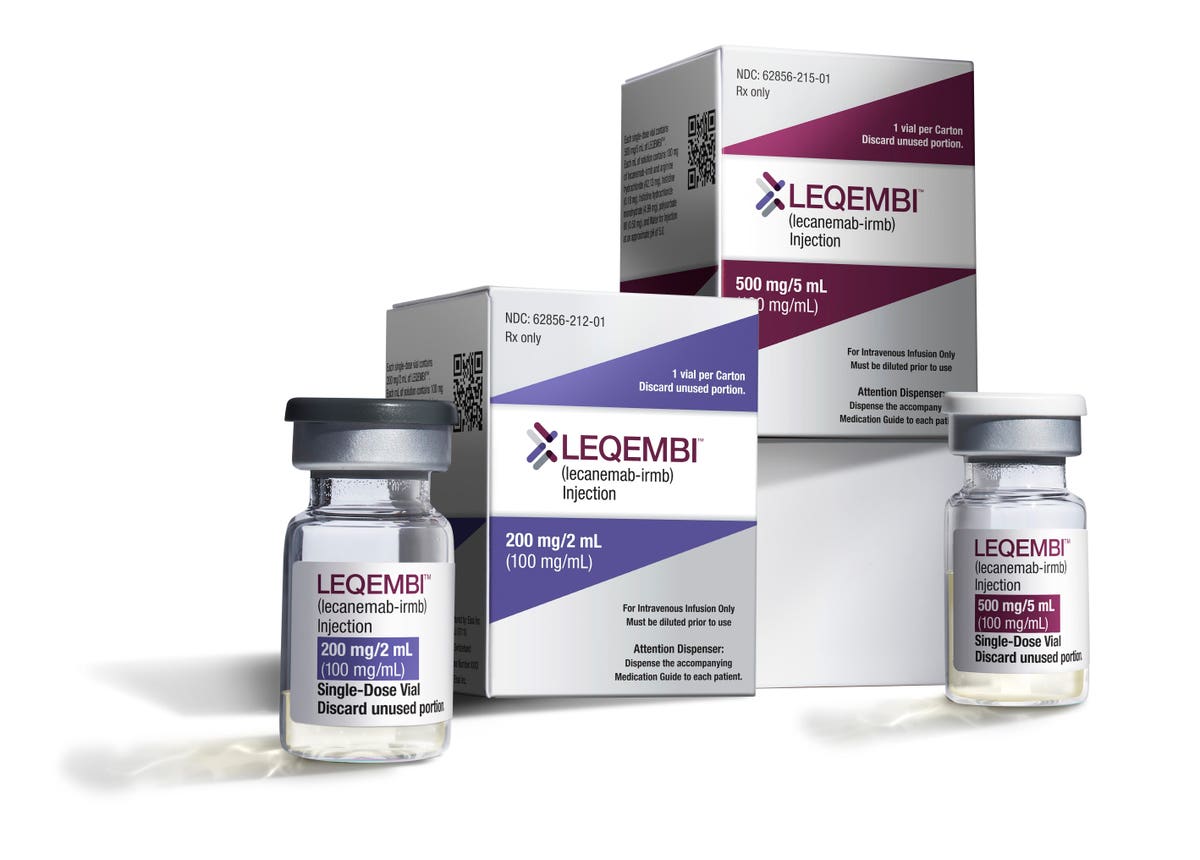
The drug industry and its supporters are blasting the Centers for Medicare and Medicaid Services (CMS) for proposing to limit Medicare payments for the new anti-Alzheimer’s drug lecanemab to patients who participate in a trial or special registry aimed at tracking their experience with the drug.
CMS says the record-keeping will help provide important, real-world information about the benefits and risks of these new drugs. But the Alzheimer’s Association, which receives financial support from drugmakers, calls the registry “an unnecessary barrier” to care. It argues that the biggest victims will be underserved patients, such as low-income, rural, and Black people.
But the biggest barrier to access may be cost. The annual price of lecanemab, marketed as Leqembi by drugmakers Biogen and Eisai, will be $26,500. Even if Medicare picks up its share of the tab, beneficiaries still will be required to pay 20 percent coinsurance, or more than $5,000 annually. Prior to the pandemic, half of Medicare beneficiaries lived on annual incomes of less than $30,000, according to the Kaiser Family Foundation.
Many Barriers
One reason for the high out-of-pocket cost: Leqembi is a Medicare Part B drug, not a more common Part D drug. The Inflation Reduction Act Congress passed last year will cap Part D out-of-pocket spending at $2,000 starting in 2025, but the limit will not apply to Part B drugs. And while the same law will allow Medicare to negotiate certain drug prices, Leqembi would be exempt from those negotiations until 2036.
And keep in mind that the registry would be far from the only constraint for patients.
The FDA approval is likely to limit use only to those with early-stage cognitive decline caused by Alzheimer’s Disease. It will not be approved for those with later stage Alzheimer’s or for those with any of the other dozens of forms of dementia. FDA may also require a warning for those at risk for brain bleeds.
Due to possible risks of those brain bleeds and other dangerous side effects, the FDA also is likely to require patients to receive regular MRI screenings. These may not be easily accessible in many communities.
Another barrier may be the way the drug must be administered. It will require patients to come to a hospital or physician’s office for twice-monthly infusions. Transportation will be a challenge. And some may choose to end (or even not start) treatment because of their fear or dislike of infusions.
Registries Aren’t New
While critics call the registry requirement unprecedented, it is not. For example, Medicare requires that doctors of patients who receive a particular surgery to repair a heart valve, called a transcatheter valve replacement and repair or TAVR, must report both the results of the procedure and follow-up information in a similar registry. This is what that report looks like.
In addition, the Centers for Disease Control (CDC) operates an electronic database that helps states track prescriptions for controlled substances such as opiods.
To make reporting as easy as possible, CMS will set up an online portal to collect data on users of lecanamab and similar drugs. If past experience is any guide, medical associations may set up their own registries as well. Medicare could encourage physicians to participate by making the forms easier to complete than the 11-page TAVR questionnaire.
Price And Access
Lecanemab is nearing full approval by the Food and Drug Administration (FDA). It received strong support last week from an expert FDA panel and the agency is likely to give full approval by mid-July.
When FDA gave the drug accelerated, but tentative, approval in January, Medicare announced it would pay only for patients participating in approved drug trials. CMS now says if FDA gives full approval (sometimes called “traditional” approval) it will pay for a much larger group, those whose care is tracked through a special registry.
Medicare’s decision to pay, even with restrictions, will be important, and costly. The Kaiser Family Foundation estimates that Leqembi could raise Medicare Part B drug costs by nearly $8 billion annually, assuming that 5 percent of older adults with Alzheimer’s Disease take the drug.
Not only will Medicare pick up the steep costs but private insurers are likely to follow its lead. The Veterans Administration also has agreed to pay for lecanemab and similar drugs for patients older than 65 who are not at high risk for brain bleeds. But without the registry requirement.
Will the registry discourage some patients from using lecanemab? Perhaps. But this class of drugs is still new and physicians and patients need to learn more about its benefits and risks.
The independent Institute for Clinical and Economic Review estimates the cost effective price of lecanamab is $8,900 to $21,500. At the mid-point, a consumer’s 20 percent payment would drop to about $3,000. Still a lot. But if the drug industry and its supporters really cared about barriers to access, Biogen and Eisai could lower the price.
Read the full article here