




Can the government levy taxes on unrealized wealth and paper profits if the owner never turned the gains into actual income?
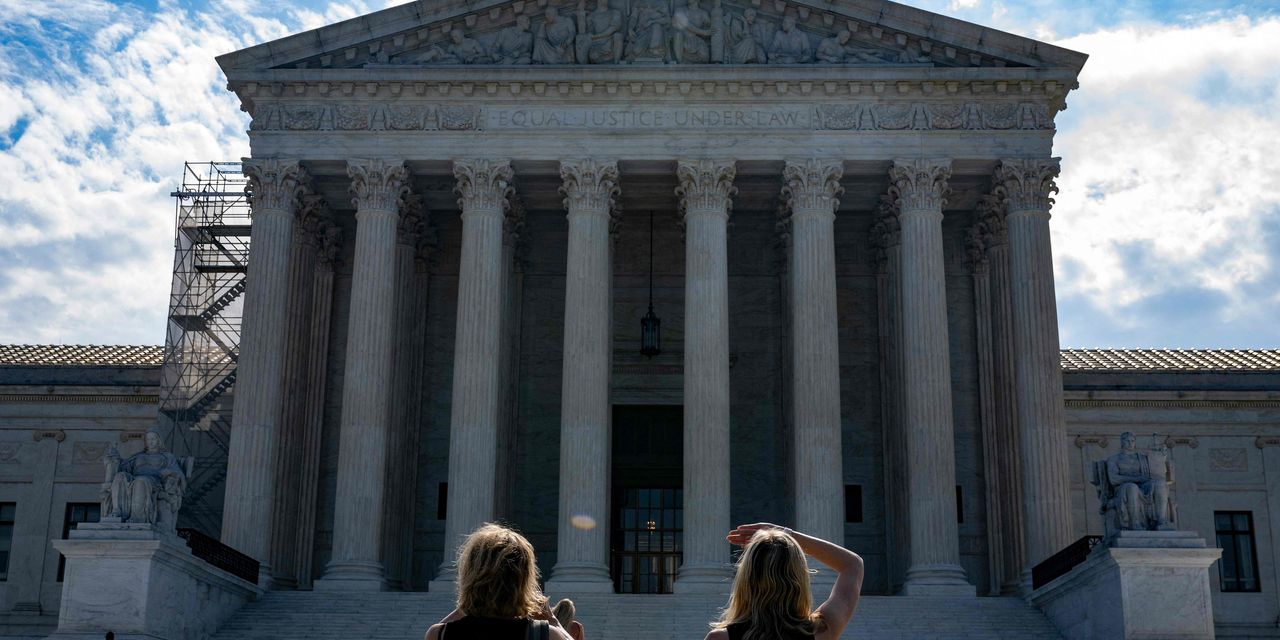
The Supreme Court agreed to weigh in on the matter when it decided Monday to hear a case about a fight over $14,729 — but it’s also about so much more.
The Supreme Court will hear the case, Moore v. United States, at a time when a national debate intensifies about whether the richest taxpayers are paying enough taxes and if not, how to assess more taxes on them.
Without the top court’s intervention, it could be too easy for lawmakers to unfairly authorize more taxes on idle wealth and holdings, according to lawyers challenging the government.
Wide swaths of the tax code are poised to revert to 2017 rules if Congress doesn’t pass new tax laws. The fight over what’s next for taxes is a “hurricane” in the making, some tax advisers say.
The tax case being heard by the Supreme Court
The underlying case before the Supreme Court stems back to a Washington State couple’s 2006 investment decision. Charles and Kathleen Moore invested $40,000 to buy a minority stake in an Indian business focused on helping rural farmers. The Moores invested what was a “significant sum” for them after hearing about the vision for the business from Moore’s friend and former coworker, court papers said.
As the business grew, the earnings were reinvested. The Moores did not receive any dividends, payments or other returns on their investment, their lawyers said.
Dividends count as taxable income. So do other passive earnings like the interest accrued in a bank account. Likewise, when an investor takes profits, or “realizes” gains from a capital asset, that event triggers taxes.
Fast forward to the 2017 Tax Cuts and Jobs Act, which passed during the Trump administration.
“The massive Trump era tax-code overhaul on individual and corporate taxes included a one-time tax called the ‘Mandatory Repatriation Tax.’”
The massive tax-code overhaul on individual and corporate taxes included a one-time tax called the “Mandatory Repatriation Tax.” The tax was geared at U.S. corporations that tucked their foreign income in offshore subsidiaries.
The tactic kept the money from domestic tax authorities until it came back via avenues like a foreign subsidiary’s dividend, according to the Tax Policy Center. As of 2015, U.S. corporations built up $2.6 trillion in earnings within their foreign subsidiaries, the think tank said, pointing to a report from Congress’ nonpartisan Joint Committee on Taxation.
The Mandatory Repatriation Tax was an offset to other benefits for corporations in the 2017 law, the United States Solicitor General’s office noted. Among other things, the corporate tax rate permanently fell to 21% from 35% under the 2017 law. Currently, lower tax rates for individuals last through 2025.
The Mandatory Repatriation Tax applied to investors like the Moores as well, their lawyers said. As a result, their unrealized foreign investment resulted in an extra $132,512 declared as taxable income, and an extra $14,729 due in taxes.
A possible violation of the 16th amendment
The couple sued for a refund.
In the litigation that followed, the Moores argued the Mandatory Repatriation Tax violated the 16th amendment. Ratified in 1913, the amendment established the Congressional power to impose a federal income tax.
The Court of Appeals for the Ninth Circuit sided with the federal government last year. The Moores appealed to the Supreme Court, arguing that the decision overturned a century of tax law built on the idea that there has to be “realization” before income counts as income for tax purposes.
Far beyond the particular tax, the decision created an opening for Congress to go much farther, according to Moore’s lawyers at the right-leaning Competitive Enterprise Institute and the international law firm Baker & Hostetler.
“Millions of Americans hold stock in their retirement and investment accounts or through mutual funds,” they wrote in their Supreme Court petition to hear the case. “Taken at its word, the [Ninth Circuit] decision below authorizes Congress to tax every single one of them on the retained earnings of the corporations in which they’ve invested.”
Moore’s lawyers said they are not speculating because some government officials are ready to tax unrealized wealth. The list includes President Joe Biden, they said.
The president’s proposed Billionaire Minimum Income Tax is a 20% minimum tax on households with at least $100 million. It’s “generally inclusive of unrealized capital gains,” according to Treasury Department documents.
“Lawyers for the federal government say the Constitutional amendment’s wording does not say income must be turned into a realized gain in order for income taxes to apply.”
Lawyers for the federal government see it differently. The Constitutional amendment’s wording does not say income has to be turned into a realized gain in order for income taxes to apply, they said in court briefs last month.
The tax wasn’t breaking new ground either, they argued. Futures contracts and certain life insurance assets were two examples of holdings that are taxed as if they were sold even if they were not, the government said in court papers.
Another instance happens when people shed their American citizenship. “U.S. citizens who relinquish their citizenship are taxed as if they had sold all their assets the day before expatriation — even though no realized gain from such a sale in fact took place,” the Solicitor General’s office said in court filings.
On Monday, Moore’s attorneys lauded the Supreme Court’s decision to include the case in its fall docket. “The Constitution does not allow Congress to point at any pot of money and call it ‘income’ and then income-tax it,” said Andrew Grossman, a partner at Baker Hostetler and the lead lawyer for the Moores.
“‘Income’ means the same thing now that it did when the 16th Amendment was ratified: gains that have been realized by the taxpayer. We are confident that the Supreme Court will vindicate that fundamental principle and confirm that Congress’s power to tax is not unlimited,” Grossman said in a statement.
The U.S. Chamber of Commerce filed a friend of the court brief urging the justices to hear the case and overrule the lower court decision.
The decision brings companies one step closer to “much-needed predictability and certainty” for businesses, said Tyler Badgley, senior counsel for the U.S. Chamber of Commerce Litigation Center.
“Companies of all sizes want to spend money investing in their employees and growing their businesses, not holding on to it in case they get hit with a surprise tax bill that might never arrive,” Badgley said. “The Ninth Circuit’s decision removed an important guardrail preventing Congress from arbitrarily redefining income to be able to tax whatever they want.”
A win for the Moores knocking down the tax could be “a windfall for large multinational corporations,” said members of the Tax Law Center at NYU Law. That sum could add up to more than $300 billion, they said.
Furthermore, they wrote, it could sow confusion and “unsettle wide swaths of the tax code, including fundamentals of the tax system that have been on the books for decades and were built on a bipartisan basis.”
The Department of Justice did not immediately respond to a request for comment.
Read the full article here