



Make a Living ClubMake a Living Club
  • Home
  • News
  • Business
  • Finance
  • Investing
  • Markets
    • Stocks
    • Commodities
    • Crypto
    • Forex
  • More
    • Economy
    • Politics
    • Real Estate
Trending Now

Christmas Cash Flow: 3 High-Yield Stocking Stuffers Under $10

December 20, 2025

Paychex, Inc. 2026 Q2 – Results – Earnings Call Presentation (NASDAQ:PAYX) 2025-12-19

December 19, 2025

Trulieve Cannabis: Cash-Generative Platform With Schedule III Optionality (OTCMKTS:TCNNF)

December 18, 2025

Maui Land & Pineapple: Rate Cuts Should Help Real Estate Plays (MLP)

December 16, 2025

HAP: An Option To Consider If Inflation And Commodities Rise In 2026 (NYSEARCA:HAP)

December 15, 2025

Brussels imposes sanctions on oil trader Murtaza Lakhani over Russia allegations

December 15, 2025
Facebook Twitter Instagram
  • Privacy
  • Terms
  • Press
  • Advertise
  • Contact
Facebook Twitter Instagram
Make a Living ClubMake a Living Club
  • Home
  • News
  • Business
  • Finance
  • Investing
  • Markets
    • Stocks
    • Commodities
    • Crypto
    • Forex
  • More
    • Economy
    • Politics
    • Real Estate
Sign Up for News & Alerts
Make a Living ClubMake a Living Club
Home » Quarter Of Americans Have Few, Many Have None [Infographic]
Finance

Quarter Of Americans Have Few, Many Have None [Infographic]

Press RoomBy Press RoomJune 30, 2023
Facebook Twitter Pinterest LinkedIn WhatsApp Email

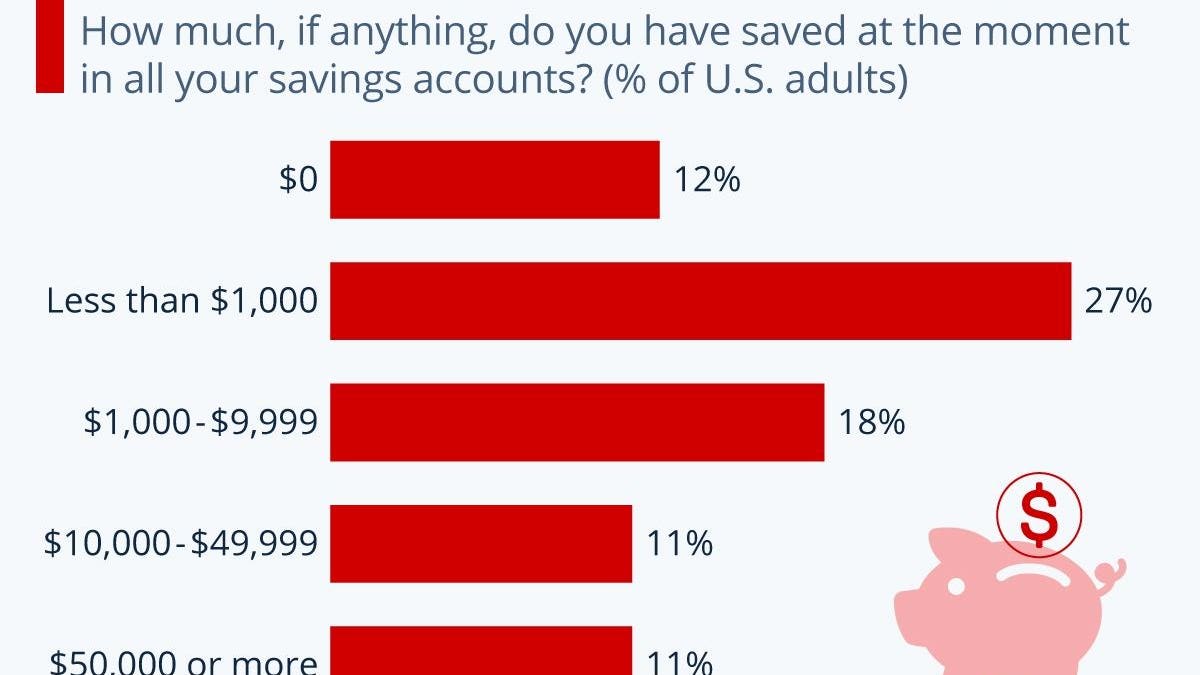
Americans today are lacking crucial savings needed for managing short-term emergencies and building long-term wealth. According to a rolling representative online survey among U.S. adults by YouGov, 27% of Americans had some savings below $1,000 as of May 2023, while 12% said they had no savings at all.

This is about as many people as those who volunteered to give answers about the status of their savings and had more than $1,000 in the bank. 18% said their saving were at least $1000 but under $10,000, while 11% each had $10,000 to $49,999 and $50,000 or more saved up. A substantial share of respondents—17%—preferred not to answer.

The survey also found that U.S. women were much less likely to have (substantial) savings. 9% of men, but just 5% of women said they had saved $100,000 or more—one of the biggest spreads in the survey. 8% of men said they had zero savings, while this sentiment was echoed by a whopping 15% of women.

Women’s multiple penalties

The reasons why women’s savings are typically lower than men’s are connected to women’s wages, which are lower on average—for the same jobs and also because women work lower-paying jobs or part-time jobs more often. One more aspect that plays into the gender wage gap is the so-called motherhood penalty—the missed wage increases and promotions women experience because they take more time off for child rearing. Additionally, women in the U.S. have higher student loan debt on average, also affecting savings negatively.

Surprisingly, single Americans are not the ones who are able to put the biggest amounts of money away for a rainy day. 10% of married Americans fell into the survey’s highest savings bracket of $100,000 or more, with widowed (6%), partnered (4%) and single Americans (3%) far behind. Married Americans dominated all savings brackets above $5,000, while people in the lower savings brackets were more likely to be unmarried, separated or divorced.

Two paychecks and a stable marriage

According to the Institute for Family Studies, the higher wealth of married Americans is due to a correlation of high education status and stable marriages. These marriages among the highly educated are also more likely to include two earners, which again increases the likelihood of big savings. Married couples can also split household costs, according to the report, making them cheaper on average than what many single people pay. They also benefit from lower taxes.

In an international comparison, American savings rates are doing poorly. In the OECD, Americans saved the 7th highest amounts of money at an annual average of $4,234 in 2020. However, this equated to only the 15th highest savings rate in the organization at 8% of disposable income. This shows that Americans, who have the highest disposable incomes in the OECD, are simply not saving as much of them as people in other developed nations despite opportunity to do so. Since the pandemic, U.S. savings rates have dropped even more.

—

Charted by Statista

Read the full article here

Share. Facebook Twitter Pinterest LinkedIn Tumblr Email

Related Articles

From Potential Paralysis To Profits

Finance December 6, 2023

What Qualifies As An HSA Eligible Expense?

Finance December 5, 2023

How To Manage Your Investments In A Politically Volatile World

Finance December 4, 2023

What You Really Need To Know

Finance December 3, 2023

4 Ways To Avoid Fake Shipping Fee Swindles

Finance December 2, 2023

Dell Supports Endeavor Miami’s Quest To Empower Black Founders

Finance December 1, 2023
Add A Comment

Leave A Reply Cancel Reply

Latest News

Paychex, Inc. 2026 Q2 – Results – Earnings Call Presentation (NASDAQ:PAYX) 2025-12-19

December 19, 2025

Trulieve Cannabis: Cash-Generative Platform With Schedule III Optionality (OTCMKTS:TCNNF)

December 18, 2025

Maui Land & Pineapple: Rate Cuts Should Help Real Estate Plays (MLP)

December 16, 2025

HAP: An Option To Consider If Inflation And Commodities Rise In 2026 (NYSEARCA:HAP)

December 15, 2025

Brussels imposes sanctions on oil trader Murtaza Lakhani over Russia allegations

December 15, 2025
Trending Now

Invesco Charter Fund Q3 2025 Portfolio Positioning And Performance Highlights

December 14, 2025

At least 11 people killed in terror attack on Jewish festival at Sydney’s Bondi Beach

December 14, 2025

Wall Street Roundup: Market Reacts To Earnings

December 12, 2025

Subscribe to Updates

Get the latest sports news from SportsSite about soccer, football and tennis.

Make a Living is your one-stop news website for the latest personal finance, investing and markets news and updates, follow us now to get the news that matters to you.

We're social. Connect with us:

Facebook Twitter Instagram YouTube LinkedIn
Topics
  • Business
  • Economy
  • Finance
  • Investing
  • Markets
Quick Links
  • Cookie Policy
  • Advertise with us
  • Get in touch
  • Submit News
  • Newsletter

Subscribe to Updates

Get the latest finance, markets, and business news and updates directly to your inbox.

2025 © Make a Living Club. All Rights Reserved.
  • Privacy Policy
  • Terms of use
  • Press Release
  • Advertise
  • Contact

Type above and press Enter to search. Press Esc to cancel.