




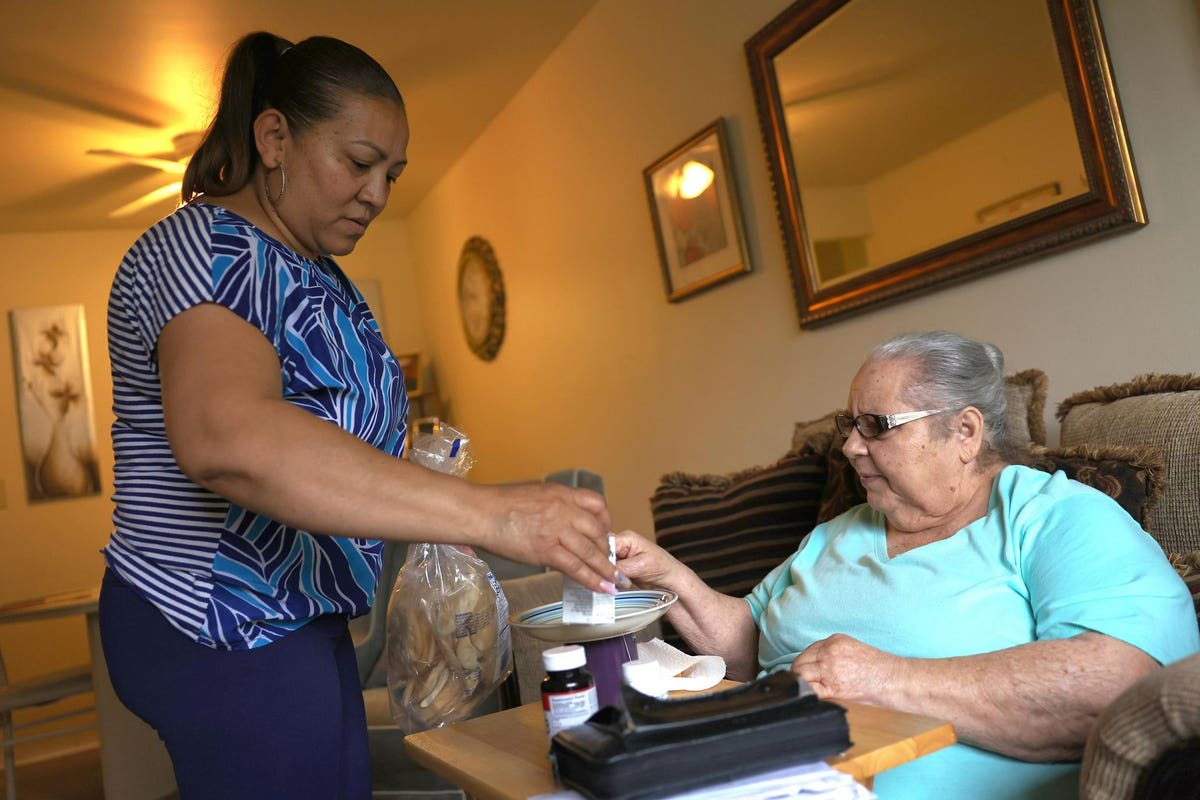
While many states have expanded their Medicaid home and community-based services (HCBS) for frail older adults, others continue to steer many enrollees into nursing homes. One big reason: They fear that enhancing home supports will encourage more older adults to enroll in Medicaid long-term care services (LTSS) and increase state costs.
But a new study published in the Journal of the American Geriatrics Society finds that this “woodwork effect” (as in, people will come out of the woodwork to enroll in Medicaid) is largely a myth. Study authors Brian McGarry of the University of Rochester School of Medicine and David Grabowski of the Harvard Medical School found no link between increased HCBS funding and increased Medicaid enrollment among older adults —the woodwork effect some state Medicaid officials fear.
Indeed, the study, which expands on and confirms the results of several older reports (here and here), concludes that increasing funding for HCBS can be more cost-effective since it lowers overall Medicaid long-term care expenses relative to the nursing home alternative.
It may happen this way: While people are more likely to receive home care if states expand Medicaid HCBS funding, many who would be newly helped already are enrolled in Medicaid but receiving few if any long-term care benefits. And that puts them at greater risk of having to move to a nursing home. By increasing their access to HCBS, Medicaid can help them to stay home for longer and lower state nursing home expenses.
Cost Savings
The authors estimate that every $1 states spend to increase Medicaid HCBS results in a $0.26 decline in Medicaid nursing home spending.
Put another way, a 10-percentage point increase in HCBS spending reduced the nursing home population by 2 percent and lowered state spending on institutional care by about 7 percent.
States can use savings to make long-term supports and services available to more enrollees or increase benefits to those already receiving support. McGarry and Grabowski found that every $1 million increase in Medicaid HCBS spending was associated with 31 more enrollees receiving home-based care. Thus, the study concludes, “Increased HCBS…spending was associated with more older adults receiving LTSS at a lower cost per beneficiary served relative to the nursing home setting.”
One example: To conserve resources, many states limit the number of people who can receive Medicaid HCBS services at any one time. Thus, hundreds of thousands of Medicaid enrollees are waiting to receive such benefits. But the authors estimate a state could shift three people from these waiting lists for the cost of one nursing home bed.
A Natural Experiment
The study examined Medicaid long-term care spending in 45 states and the District of Columbia from 1999-2017. Overall, states have significantly expanded their HCBS programs so that by 2019, almost 60 percent of Medicaid LTSS budgets were spent on home-based care, triple the share in 1995. But there remains great variation among states. For example, in 2019, Mississippi Medicaid spent only about one-third of its long-term care budget on home-based care while Minnesota spent more than three-quarters.
That variation created a valuable natural experiment: Did states that expanded HCBS see higher-than-expected growth in Medicaid long-term care enrollment?
The study focused only on Medicaid participants who were age 65 or older. It excluded younger people with intellectual and developmental disabilities who account for a large share of Medicaid LTSS spending. However, the vast majority already receive care at home or in group homes rather than in nursing facilities.
While the authors relied on more recent data than previous studies, they still had to work with Medicaid information from 1999-2017. As a result, their analysis does not reflect significant increases in assisted living and non-nursing facility memory care that occurred during the period (very little of which was paid by Medicaid). Nor does it reflect changes that occurred during the Covid-19 pandemic.
The Right Balance
The federal government pays for more than 60 percent of Medicaid costs, though the federal share varies by state. States have broad flexibility in the way they operate their Medicaid programs, though they need a special waiver from the federal government to run home-based programs.
There may be many reasons why low-income frail older adults fail to participate in Medicaid HCBS programs. They may need more care than they can receive at home or may be unable to navigate an extraordinarily complex care system. And even in states with a robust HCBS benefit, it still may be impossible for a frail older adult to stay at home without the active support of a family caregiver.
That suggests Medicaid still needs to support facility-based care. But states can provide more help in the setting people want, while getting a bigger bang for their Medicaid buck by enhancing home-based care. And, if McGarry and Grabowski are right, they can do it without generating a costly wave of new Medicaid enrollments.
Read the full article here