




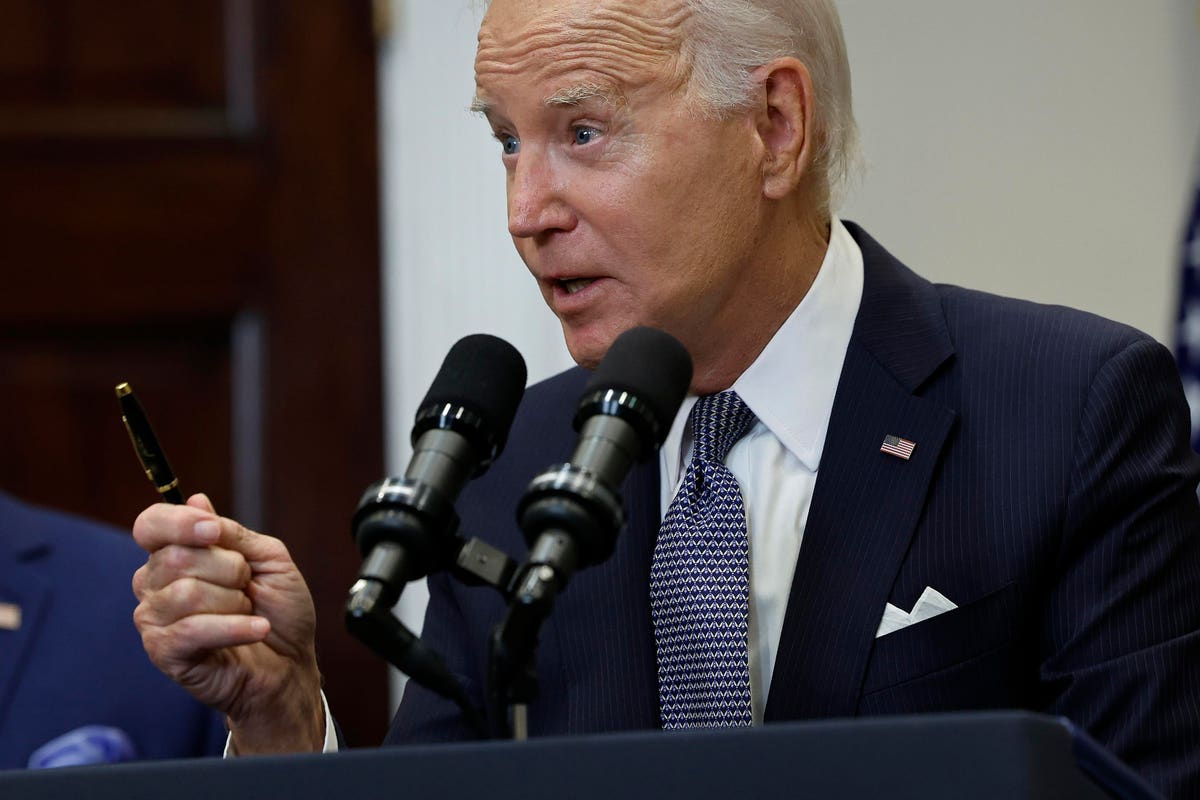
You’ve likely heard by now that the $10,000 to $20,000 in student loan forgiveness promised by the Biden administration is not going to happen. This is because the U.S. Supreme Court ruled President Biden lacks the authority to permanently erase student loan debt on his own.
What happens next is probably going to be incredibly chaotic, especially when you consider the fact millions of Americans haven’t been making federal student loan payments the last three years. The U.S. Department of Education is stating that interest on federal loans will begin accruing on September 1, 2023, and that payments for most borrowers will resume the following month in October.
If you’re wondering where the $200, $600, or whatever you owe each month is coming from in a few short months, you’re definitely not alone. After all, most of us changed our financial habits or work habits at some point during the pandemic, and not everyone is prepared to start making payments again. Before you panic, however, you should get your financial ducks in a row and see what other options you have. The five steps recommended below are a good place to start.
1. Confirm Or Update Contact Information
First, it’s important to make sure you’re getting any and all relevant updates on your loans and new payments from whoever is servicing your loans. It’s also fairly likely your contact details have changed over the last few years, so you’ll want to update this information if that’s the case.
The U.S. Department of Education recommends taking a few minutes to confirm or update the contact information in your profile on your loan servicer’s website. You should also do the same with your StudentAid.gov profile while you’re at it..
2. Review Auto-Debit Options
If you had your federal student loan payments set up for auto-debit before the pandemic, the U.S. Department of Education is going to require you to opt back into this option for automatic payments to pick back up. The main scenario where auto-debit payments will begin without you opting in is if you signed up for auto-pay after March 13, 2020.
Either way, you should probably see if you’re signed up for auto-pay or find a way to opt back in if that’s what you want. The U.S. Department of Education says you can do this by logging into your loan servicer’s website or by contacting your loan servicer.
3. Assess Your Financial Health
Look over the last few months of your bank statements and bills to get a general idea of “where you’re at” financially. Do you have enough extra money to cover your upcoming federal student loan payments each month as it stands? Or, do you need to cut spending in other areas to free up cash to do so?
These are good questions to ask yourself far ahead of October when payments for all federal student loans resume. This is especially true if you know your monthly income is insufficient to cover your loan payments on top of your regular spending and bills.
4. Consider Alternative Repayment Plans
Now is also a great time to consider all the different repayment plans you have access to, and to remember there’s nothing requiring you to stick with the payment plan you have. There are quite a few repayment plans to consider for federal student loans, including standard, 10-year repayment, a graduated repayment plan, and an extended repayment plan that lets you repay your student loan balances over the course of 25 years.
There are even income-driven repayment plans that let you repay a percentage of your “discretionary income” for 20 to 25 years before having remaining loan balances forgiven. Since these repayment plans are based on income and geared to borrowers whose incomes are on the lower end, those who earn the least can have a monthly payment as low as $0 on these plans.
On top of current income-driven plans you have already heard of such as Pay As You Earn (PAYE) and Income Based Repayment (IBR), the Biden administration also just unveiled details on a new income-driven plan called the SAVE plan. This plan is built upon an existing income-driven repayment plan called Revised Pay As You Earn (REPAYE) and it will replace it when it becomes available to borrowers.
According to a fact sheet on this plan from the Biden administration, the SAVE plan will cut borrower’s monthly payments in half, allow many more to pay $0 per month toward their federal student loans, and save all other borrowers at least $1,000 per year. In the meantime, the plan ensures balances will not grow if a borrower’s monthly payment is less than the amount of interest that is supposed to accrue each month.
Borrowers on the SAVE plan will also have their remaining loan balances forgiven after 10 years instead of 20 if their original loan balances were $12,000 or less. Further, the amount of income protected from repayment will increase under this plan so that no one who earns more than 225% of the Federal Poverty Limit (FPL) will have to pay a dime toward their federal student loans each month. While you can’t apply for the SAVE plan just yet, the U.S. Department of Education says anyone who applies for REPAYE will be automatically moved to the new plan once it’s available.
Finally, the U.S. Department of Education is offering a Fresh Start program for people whose loans were in default before the pandemic. You have to contact your loan servicer to see if you’re eligible, but doing so now could get your loans moved back to repayment status and with a loan servicer. Taking steps to qualify could also get the record of your default removed from your credit reports.
5. Take a Deep Breath
No matter what you do, try not to panic about your upcoming student loan payments and focus on solutions instead. You still have several months to figure out how you’re going to handle these new payments one way or another, whether you wind up having to cut spending in other areas of your budget, opting to pick up part-time work to earn more money, or switching repayment plans to get a better deal.
The latter option — switching repayment plans — is probably your best bet to consider if your monthly income isn’t enough to keep up with your loan payments. After all, income-driven repayment plans base how much you owe each month on a percentage of your “discretionary income,” so having a low or average income can benefit you when it comes to getting an affordable payment.
If you’re curious what your new monthly payment would be if you did switch to an income-driven repayment plan, the Department of Education’s loan simulator can help you find out.
Read the full article here