




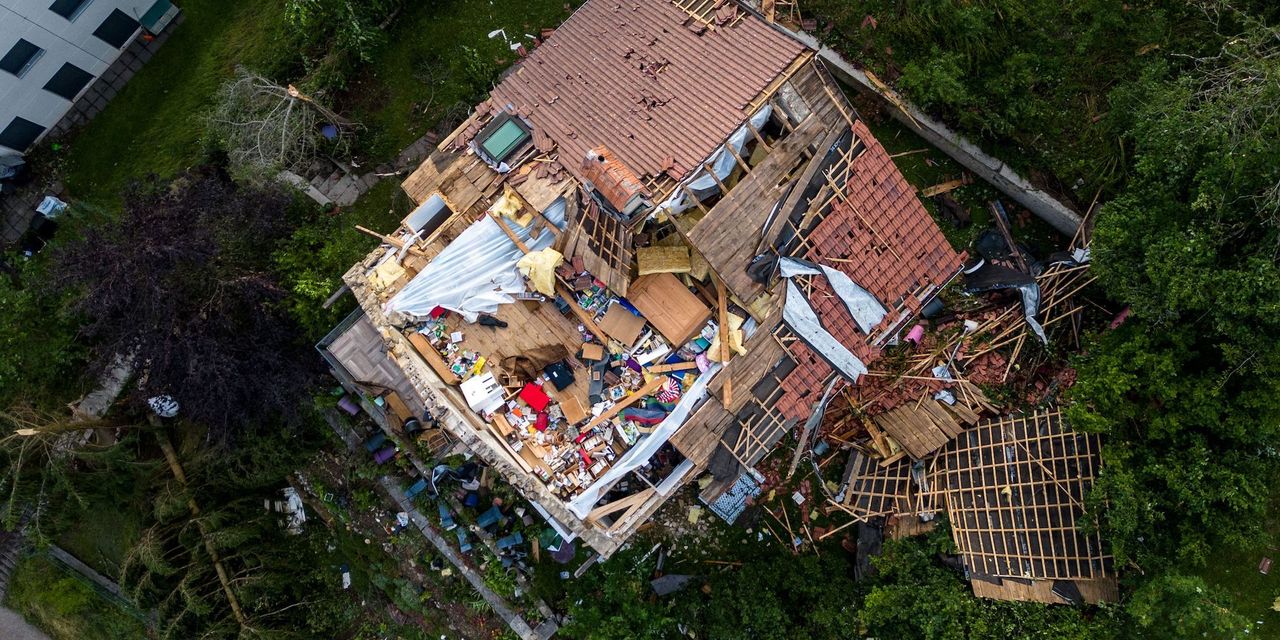
Just about every part of the U.S. has felt the impact of climate change this summer, with drifting smoke from Canadian wildfires, flash flooding in the Northeast and dangerously high temperatures across the South. Extreme weather not only poses health risks but can also make it harder and more expensive to insure your home.
Climate change and natural disasters
“Climate change acts as an amplifier of hazards,” says Aris Papadopoulos, a resilience expert at Florida International University’s Extreme Events Institute. Climate change is making natural disasters both more frequent and more intense, he says. And that means more risk to your home.
For example, a warmer atmosphere brings more evaporation, heavier rainfall and rising sea levels — all of which could increase your home’s chance of flooding.
Meanwhile, in the Western U.S., wildfires are happening more often and burning longer, says Kimiko Barrett, a wildfire research and policy analyst at Headwaters Economics, a nonprofit research group.
But more frequent natural disasters are only one part of the problem when it comes to insurance, Papadopoulos says. The other is the increasing number of homes in harm’s way.
“We’ve been building in flood plains. We’ve been building too close to the riverbanks, to lake banks, too close to the shore,” he says. Many homes are also going up near forested areas prone to wildfires.
“The combination of the greater hazards and the vulnerability of these [buildings] is what’s put us on this course of destruction,” Papadopoulos says.
Also see: Wind damage will impact more U.S. homes than before, in Florida especially. How best to protect your property.
Rising costs, limited availability
Homeowners count on their insurance policies to be there for them if disaster strikes. But in the face of increasing risk, you may pay more for the coverage — or even have trouble getting it at all.
In recent months, State Farm and Allstate have stopped selling new homeowners policies in California, citing rising catastrophe risk as one reason. Numerous carriers have gone out of business or withdrawn from the home insurance market in hurricane-prone Florida and Louisiana over the past few years, leaving homeowners with fewer options. In Colorado, the legislature recently created a state-run insurer of last resort to help homeowners in wildfire-risk areas who are having trouble finding coverage.
In states like these, some homeowners are scrambling to find a policy after their insurer drops them or settling for less comprehensive coverage because it’s all they can afford.
“I don’t know where this is going to go,” says Dori Einhorn, owner of Einhorn Insurance Agency in San Diego. “This is by far the worst I’ve seen it in my 15 years in the industry.”
Climate change isn’t the only reason for the industry’s upheaval in certain states. Inflation, government regulations and expensive lawsuits have also cut into insurers’ profits in many parts of the country.
But the more natural disasters there are, the more insurance companies have to pay in claims — and the more they have to pay for their own insurance policies, known as reinsurance. Then, they pass these costs to customers in the form of higher premiums.
Related: ‘It was so traumatic to see the destruction’: More Americans are moving to flood-prone areas. Why do they defy the warnings?
Insufficient coverage
Cost aside, you may find that your existing homeowners policy doesn’t offer enough coverage for the risks you face as the climate changes.
In particular, you’ll want to check your home’s chance of flooding, even if you don’t live on the coast. Scientists expect heavy rainfall to cause more flash flooding in the future, and standard home insurance policies won’t pay for flood damage.
To check your risk, enter your address on the Federal Emergency Management Agency’s flood maps or visit RiskFactor.com, a resource from the nonprofit First Street Foundation. If your home has a moderate or high risk, you may want to buy flood insurance.
Be aware that most policies have a 30-day waiting period before they take effect.
Plus: Feds propose 18% fuel-economy increase — to 43.5 MPG — for new vehicles by 2032
What you can do
Having trouble finding affordable homeowners insurance? Reach out to an independent insurance agent or broker in your area. They can help you evaluate your coverage needs and shop around on your behalf.
You may also want to invest in making your home more resistant to disasters. Depending on where you live, this could include replacing flammable mulch with gravel to reduce your risk of wildfire or installing flood vents to protect your home’s structure from high water. Learn more about how to protect your home from climate change.
Read: What makes flash floods so dangerous? Here’s how to protect yourself.
Taking steps to make your home more resilient can often earn you discounts on home insurance. Even more importantly, it may help you avoid serious damage and pricey claims if disaster strikes.
“Insurance companies are the canary in the coal mine,” Barrett says. “They are simply reflecting the risk that’s already on the ground. And if we are trying to reduce risk to people and communities, we need to do that long before insurance becomes a problem.”
More From NerdWallet
Sarah Schlichter writes for NerdWallet. Email: [email protected].
Read the full article here