




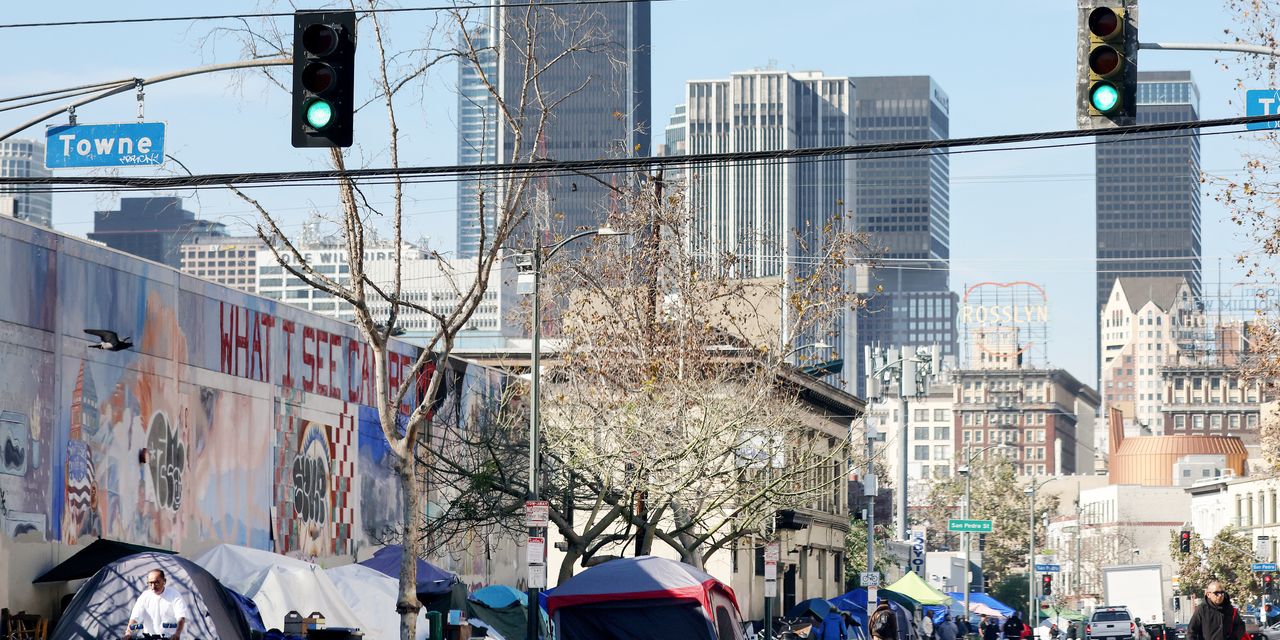
Homeless villages under highway overpasses and tent camps in other public spaces create the appearance of a new epidemic, but historically, homelessness has been endemic to urban America.
In the late 19th Century, skid rows appeared in New York and other cities, where flop houses sheltered up to 75,000 people a night. Often, they worked in low-wage, seasonal jobs and moved among cities on freight trains.
Homelessness decreased from 2007 to 2019. It rose with the COVID pandemic shutdown and the U.S.-Mexico border crisis but as of 2022 had not reached earlier levels.
That said, homelessness in the U.S. now is more obvious because it is increasingly concentrated in high-rent cities such as San Francisco, Los Angeles and New York.
Through the 1960s, these same big cities offered decent-paying, low-skilled employment and affordable housing. Since then, economic forces including automation, urban renewal and gentrification, along with finance, creative industries and technology activities, displaced manufacturing in major cities and drove up rents relative to low-skilled wages. Nowadays, 70% of America’s extremely low-income households spend more than half of their incomes on rent.
The concentration of homelessness, along with the decline in public safety generally, impedes the post-pandemic economic recovery in many cities. In San Francisco, office workers complain about maneuvering around human feces, discarded needles and the homeless, and resist returning to the office.
“More than half of the people in homeless shelters and 40% of those living in encampments are employed.”
Most Americans would be surprised to learn more than half of the people in homeless shelters and 40% of those living in encampments are employed. Many homeless people don’t lack a work ethic; they simply don’t earn enough to rent an apartment.
In addition, most homeless don’t suffer from debilitating mental health problems or drug addiction. Those problems are more concentrated among street people, but merely getting folks into detoxification and cleaned-up to take a job won’t solve homelessness.
Housing in short supply
Each year about 900,000 people both become and escape homelessness in America. Many lose jobs and after struggling on inadequate unemployment benefits are evicted from apartments. Or leases expire, and rent increases make apartments unaffordable.
Federal Section 8 housing can help but waiting lists average 28 months. That’s not much help when a family must vacate within 30 days.
Eviction moratoriums like that in Los Angeles are palliatives. Those encourage landlords to be even more careful about credit histories — which can harm low-income workers who went through a rough patch — and discourage the construction of more affordable housing.
President Joe Biden’s all-government strategy to lower homelessness by 25% by 2025 focuses on making available to the unsheltered a larger share of already scarce affordable housing and mental-health resources, and addressing discrimination — homelessness is particularly visited on minorities and LGBTQI+.
But obsessing about structural racism and homophobia does not confront the more fundamental problem. A worker must earn three times the city’s minimum wage to afford the average apartment in Los Angeles — about $90,000 a year.
Support young adults
Few high-school graduates who do not enroll in college or an apprenticeship program can find a job, pay rent and afford other necessities. They rely on family and friends for housing and general help in easing into an independent adult life.
Young adults leaving foster care are particularly vulnerable. Children in foster care are there because their families are either dysfunctional or missing and enter adult life with little support network. By the age of 26, more than 30% experience homelessness.
“ Veterans — especially female veterans — are overrepresented among the homeless. ”
Clearly, providing transitional support for young adults leaving foster care to maintain them in apprenticeship programs would pay high social dividends.
Young people who lack support networks can enlist in the armed forces but not everyone exits the military with a great skill that is marketable in the private sector. Veterans — especially female veterans — are overrepresented among the homeless.
Solutions — none of them easy
Sweeping homeless encampments from public spaces simply chases the mentally ill, substance addicted and those who earn too little, from one public space to another. Instead, we need triage and dormitories—not repurposed hotels, as those are a too high-cost option.
Those who are mentally ill or addicted beyond redemption and cannot function—specifically, hold down a job and care for themselves in a dormitory setting — should be re-institutionalized.
Those who could work but require training should be compelled to accept it or be disqualified from government benefits. Along with those who can work now, housing vouchers are intriguing, but where would the folks they displace in scarce low-cost apartments sleep?
Building more affordable housing in major cities faces too many obstacles and takes so much time that it is laughable as a solution to homelessness now. Government-run and non-profit dormitories and communal shelters for families could become essentially permanent residences and would be a more viable solution.
Peter Morici is an economist and emeritus business professor at the University of Maryland, and a national columnist.
Read the full article here