




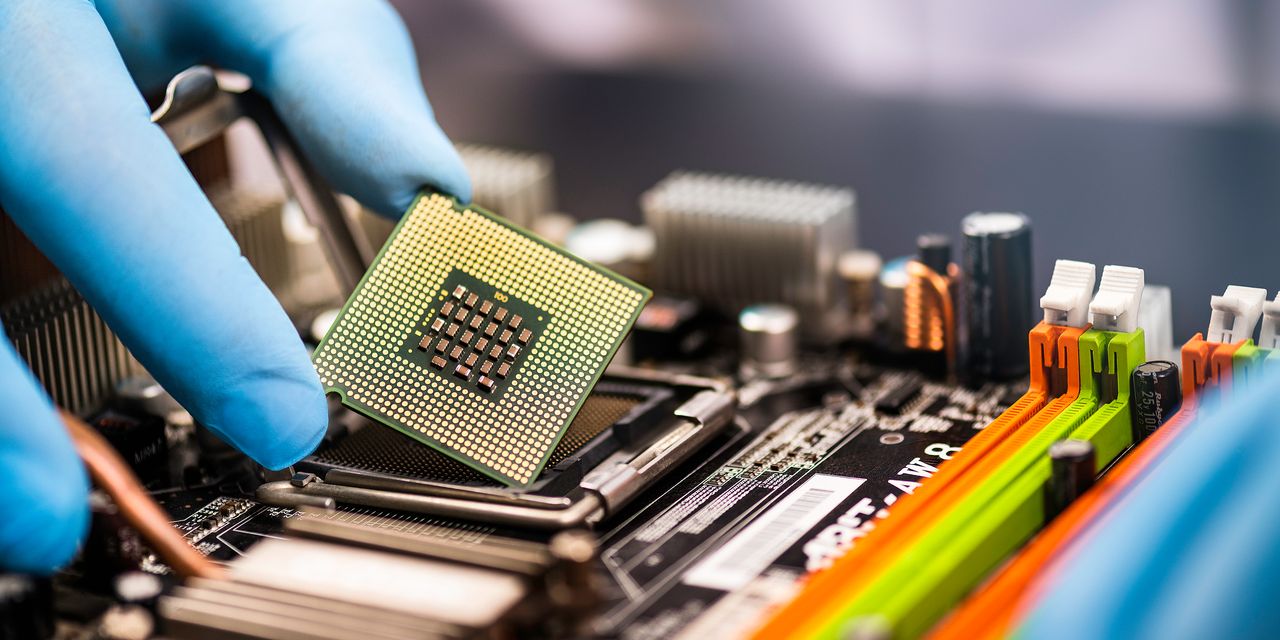
The world is experiencing a multi-trillion-dollar shift in the semiconductor industry. The semiconductor revolution (which I have discussed for years) has enabled much of the technological progress we have witnessed over the past 50 years.
More powerful semiconductors give more computing power, which allows us to complete ever-challenging and more complex tasks. For example, the advances in artificial intelligence, from large-language models to self-driving cars, are possible because companies such as Nvidia
NVDA,
and Tesla
TSLA,
have developed chips with enough computing power to process and analyze the massive amounts of data needed for AI to work.
The largest tech companies are among the fastest-growing buyers of semiconductors. Companies including Apple
AAPL,
Alphabet
GOOG,
Microsoft
MSFT,
and Meta Platforms
META,
purchase billions of dollars of chips each year to run phones, PCs, servers and more. Big tech companies including Intel
INTC,
Nvidia, Broadcom
AVGO,
Qualcomm
QCOM,
and Advanced Micro Devices
AMD,
purchase chips from an array of semiconductor designers that make chips for different applications.
Almost all of these chip designers are “fabless” — meaning they outsource the manufacturing of the chips to a third-party foundry, such as Taiwan Semiconductor Manufacturing
TSM,
or GlobalFoundries
GFS,
So here is the multi-trillion dollar shift: big tech and the other major semiconductor buyers are designing more and more of their own semiconductors in-house, rather than pad high margins at the fabless semis.
Why? The big tech companies have the scale and capability to design application-specific chips, at lower cost, that also significantly improve the quality of their products when compared to the same product built around the generic off-the-shelf chips designed by third parties.
This trend has already started and will only continue to accelerate. For example, almost all of Apple’s products come with chips designed by Apple in California. Apple cut Intel and its x86 architecture from the Mac starting in 2021. A decade earlier, Apple cut Samsung’s chip out of the iPhone. Apple has also tried to cut Qualcomm’s Snapdragon modem from the iPhone, but has signed a new contract with Qualcomm to supply the iPhone with 5G modems through 2026 (at least in part). Tesla also designed its own CPU to control its cars as well as its own AI chip, known as the D1, which powers the Dojo Supercomputer (more info here).
“ The value provided by the fabless semis is diminishing as big tech grows in scale and capability. ”
Many other major tech companies design more of their own chips, including Alphabet, Meta Platforms, Microsoft and Amazon.com
AMZN,
As this trend continues to accelerate, many, if not most, of the fabless chip designers may lose their biggest customers. But really, what value do the fabless semis offer to their customers? These four key attributes of the fabless semis encompass their value proposition:
- Intellectual Property
- Software/Integration
- Talent/Know-How
The reason that the big tech companies are starting to replace third-party chips with in-house silicon is that the value provided by the fabless semis is diminishing as big tech grows in scale and capability. Apple, for instance, clearly has enough talented engineers and capital to design chips itself.
Critically, the big tech companies are also one step closer to the end-consumer. They can also design the software needed to integrate their own chips with existing hardware and operating systems. Further, the big tech companies do not rely on the semiconductor companies to get their products to market.
But as the recent Apple/Qualcomm deal makes abundantly clear, switching to in-house chip design isn’t easy. What is preventing Apple from leaving Qualcomm? It has to do with the factors in a decision to design chips in-house versus using a third party. There are at least five considerations that a chip buyer analyzes:
- Scale
- Capability
- Specificity
- Efficiency/Power Consumption
- Cost
For scale, a chip buyer needs to consume enough chips to justify the cost of hiring engineers and dedicating resources to chip design. Product improvements alone may not be enough to justify the added cost of hiring your own chip designers if you do not have adequate scale.
As for capability, the big tech companies are in a prime position to cut out the chip designers because they have the talent, IP and capital required to design a chip. On the other hand, less-sophisticated chip buyers probably do not have the capability to design their own chips. Yet the ratio of sophisticated/capable chip buyers to incapable buyers appears higher than ever, leaving more customers assessing the possibility of bringing chip design in-house.
Next is specificity. The specificity analysis takes place at the application level, rather than at the company level. Standardized chips do not offer equal utility across applications. A chip selected to run a car’s operating system is not typically going to be the same chip selected for a phone, even if they have equivalent computing power, because their application and operating environment are radically different. Tesla demonstrated this when it opted to design its own self-driving chip, rather than rely on existing technology from a third-party chipmaker.
Efficiency and power consumption are the next factors. Tesla did not need a super-tiny, powerful and power-efficient chip, because it is not limited by the same constraints faced by Apple or Dell Technologies
DELL,
for example, when selecting chips for phones or PCs. Apple and Dell, on the other hand, are both looking to optimize battery life and space in the much-smaller hardware that houses the chips, so they focus on size and efficiency.
The last point is cost. Apple reportedly saved billions of dollars by switching from Intel CPUs in its computers. Tesla can make its D1 chip for 1/6th of the price of Nvidia’s H100. It’s the same old story of cutting out the middleman. Why pay chipmakers 50%-70% gross margins if you can do it yourself?
“ Think what would happen to Intel and AMD if Microsoft designed its own CPUs for its PCs.”
So why does this multi-trillion-dollar shift in the semiconductor industry matter? We think that the market is largely overlooking the potential risk to the scores of multi-billion dollar fabless semis (with trillions of dollars in collective market cap) that risk losing 40%-60% of their revenue as their customers start designing their own chips.
Just think what would happen to Intel and AMD if Microsoft designed its own CPUs for its PCs. This scenario won’t play out overnight, but the big tech companies are already taking major steps in that direction and yet most of the semiconductor companies have not even acknowledged this shift in demand, much less altered their company strategy. This trend should only accelerate as many, if not most of the major chip buyers today satisfy the four criteria above and move silicon design in-house.
This multi-trillion-dollar shift in the chip industry further highlights the strategic importance of the foundry businesses. Regardless of who designs the chips, somebody has to fabricate them. However, building fabs is extremely expensive, and no major companies are investing in fabs other than Taiwan Semiconductor Manufacturng
TSM,
and Intel. This lack of fab investment from the semiconductor industry is representative of its misdirected focus and lack of recognition.
Intel has learned this early enough to make a strategic shift. By the time AMD, AVGO, QCOM and others recognize that their customers are doing everything they can to get away from using their chips, it may be too late to shift strategies to building fabs. This process takes time and a lot of capital expenditures. TSMC and Intel, for example, will each spend about $30 billion this fiscal year on capital expenditures. This combined spend of $60 billion is roughly equivalent to the entire market cap of KLA
KLAC,
the world’s 15th most valuable semiconductor company.
Cody Willard is founder of 10,000 Days Fund Capital Management and runs the 10,000 Days Fund, a hedge fund. At the time of publication, Willard and/or the hedge fund were long NVDA, TSLA, AAPL, GOOG, META, TSM, AMZN, and INTC, and short AVGO, SMH and SOXX. Positions can change at any time and without notice.
More: Arm deal is expected to lift tech IPOs, but not all future debuts will have the same draw
Read the full article here