




About the author: Gregory Daco is the chief economist at EY and former chief U.S. economist at Oxford Economics. Views expressed in this article are those of the author and don’t necessarily represent the views of Ernst & Young LLP or other members of the global EY organization.
It’s quite the paradox. The day the U.S. Federal Reserve decided to press the pause button on interest-rate increases is also the day when investors started incorporating the Fed’s “higher for longer” monetary policy paradigm.
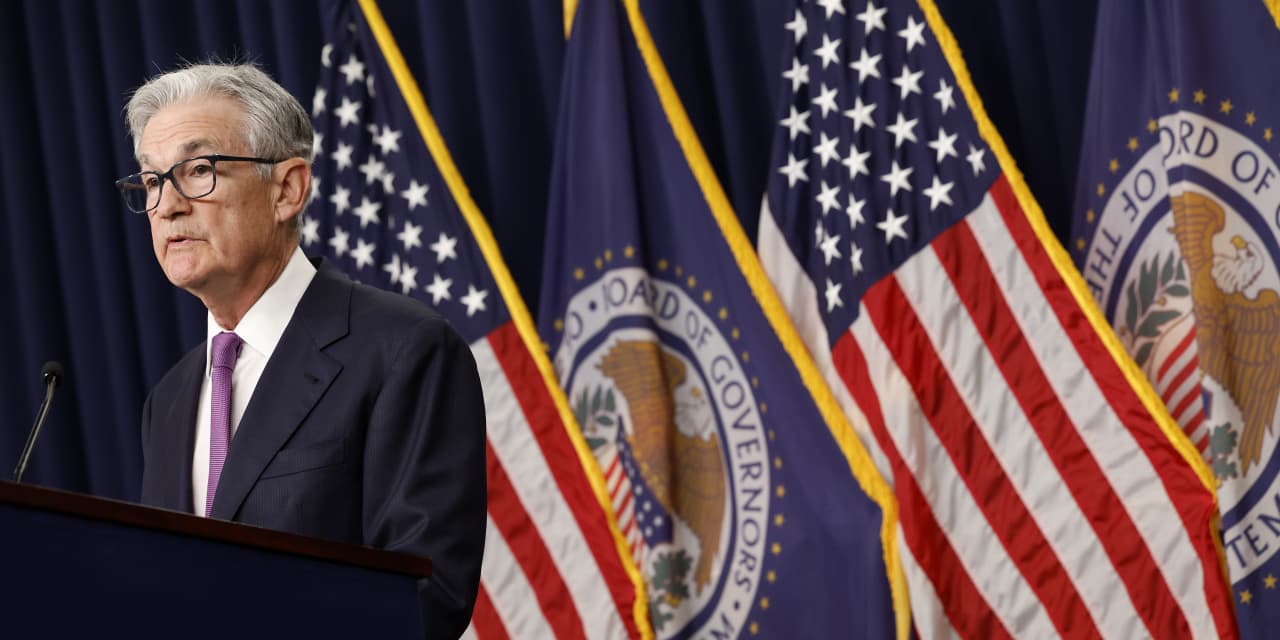
Last week’s Federal Open Market Committee statement was a snoozer. It featured only seven new words, while Fed Chair Jerome Powell stuck to the script and didn’t make any headline announcement during his press conference. Yet, investors finally said, essentially, “we believe you now,” and priced in a higher policy-rate trajectory.
The reason behind this sudden realization that the Fed was serious about keeping rates higher for longer likely came from the policy makers’ median fed funds rate projections. The infamous “dot plot” pointed to one more rate hike in 2023 and only a half-point of rate cuts in 2024, down from one point of expected rate cuts in the June dot plot.
But the market repricing doesn’t only reflect the fact that most policymakers anticipated fewer rate cuts next year, it also reflects the fact that the anticipated level of the policy rate at the end of 2024 and 2025 is now significantly higher. The dot plot shows a fed funds rate above 5% at the end of next year and still at 3.9% in more than 2 years. Just six months ago, Fed policy makers’ median view was that rates would be 0.75 points lower than that, at 4.3% next year and 3.1% in 2025.
This was the most important signal for the economy. Investors, business leaders, and consumers are now realizing that they cannot hold their breath indefinitely in hopes of a rapid fall back in the cost of capital.
Indeed, it’s not just short-term interest rates that have been pressured up by the Fed’s forward guidance, but also long-term Treasury bond yields, largely reflecting expectations of higher short-term rates for a prolonged period. Granted, long-term interest rates also reflect inflation, economic growth, and government debt expectations along with risk and term premia, but the key determinant of late appears to be the increased likelihood that short-term rates will remain higher for the foreseeable future.
The recent rise in bond yields across the yield curve is doing some of the Fed’s monetary policy work. Financial conditions are tightening, with rates on consumer, mortgage, and business loans rising in sync.
To be sure, the adaptation to a higher cost of capital will come at a cost for the economy. Certain spending decisions, investment plans, and business transactions will have to take a backseat. But it could eventually lead to a brighter outlook.
Slower final demand and a rebalancing of labor market conditions resulting from an adjustment to this higher cost of capital environment should lead to reduced price and wage pressures, thereby allowing the Fed to gradually recalibrate monetary policy toward a less restrictive stance.
In addition, while a higher-cost-of-capital environment could be seen as a deterrent to investment and spending, it may lead to more efficient capital allocation. Private sector actors will need to exercise more scrutiny toward investment decisions with the highest potential return.
For anyone still on the sidelines, waiting out rates isn’t a tenable strategy any more. Rather, business leaders, investors, and consumers should acknowledge, accept, and adapt to a higher cost of capital knowing that the band of uncertainty around rates is much tighter than it’s been at any point over the past two years.
Guest commentaries like this one are written by authors outside the Barron’s and MarketWatch newsroom. They reflect the perspective and opinions of the authors. Submit commentary proposals and other feedback to [email protected].
Read the full article here