




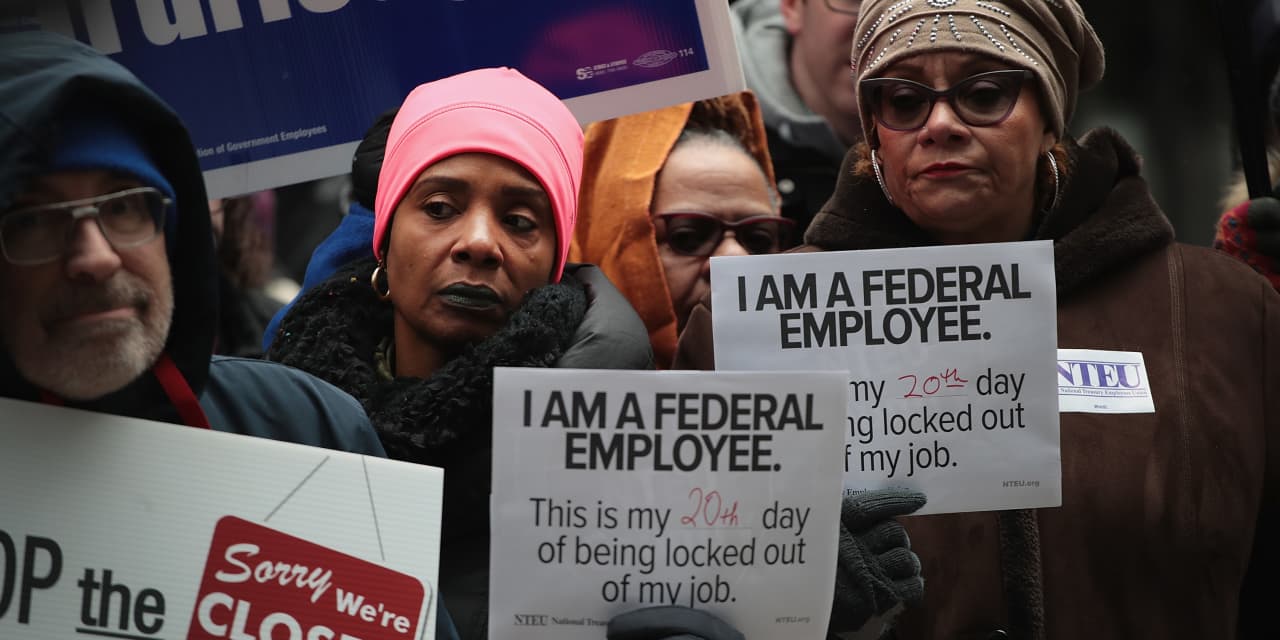
There have been more government funding lapses over the past 40 years than there have been presidential elections. And the U.S. appears to be headed for one more if Congress doesn’t act to fund the government before Oct. 1.
That would put the tally at 15 shutdowns of various levels since 1980, when it was determined that federal agencies couldn’t operate during a funding gap.
Most of the shutdowns since the 80s have lasted only a few days, and the average length is about a week. But that figure is skewed by three outliers: the 21-day shutdown that ended in 1996, the 16-day shutdown in 2013, and the monthlong shutdown that ended in 2019.
That last one holds the record for longest in history. It started on Dec. 21, 2018, at 12:01 a.m. and ended Jan. 25, 2019, when then-President Donald Trump signed a deal late Friday to reopen the government. That shutdown lasted either 34 or 35 days, depending on the source.
The Office of the House Historian says it lasted 34 days. The office counts the length of shutdowns in full days. So even though the government was shut down for the majority of Friday, Jan. 25, it doesn’t count as a full day in the eyes of the House.
Plenty of news outlets, including Barron’s, have included that day in their sum, putting the record at 35 days. By either count, the shutdown is the longest in history. The debate over 34 or 35 days matters little except for keeping score.
But the length of a shutdown does matter. A long shutdown will have a larger impact than a short one. That’s the case not only for federal employees, many of whom will either be furloughed or have their pay delayed, but also for the economy. The economics research team at
Goldman Sachs
estimates that for each week the government is shut down, 0.2 percentage points from quarterly GDP growth is lost.
Goldman puts the odds of a government shutdown at 90% and said it sees a shutdown lasting two to three weeks. The researchers also see the possibility of more than one shutdown.
“The two parties are far apart on spending proposals, and any agreement to reopen the government after the likely shutdown is likely to expire before year-end, potentially risking another funding lapse,” the researchers wrote on Tuesday.
For context, the Congressional Budget Office estimated that the 2018-2019 shutdown cost the economy $11 billion.
SHUTDOWN IMPACT
How a government shutdown would affect…
Write to [email protected]
Read the full article here