




I often think that if you took away cable news, social media and the politicians who care more about getting on TV than solving problems, the debt crisis the U.S. is in would have been solved a long time ago.
Instead, polticians have let things drag out to the point where the possibility of an actual U.S. credit default seems all-too-real. And given that American politics are nastier, more divided and more partisan than ever, it very well could happen.
Still, we have seen this movie before. Many times. I thought it might be instructive to look back and see what lessons can be learned from the past few showdowns and what it could mean for investors this go-round.
December 2021: President Joe Biden was in the White House and Democrats controlled the House and Senate. But they didn’t have 60 Senate votes,which are necessary to pass budgets. Senate Republicans could have balked, but chose not to.
The deal: In the end, both parties compromised, creating a one-time filibuster loophole that allowed Senate Democrats to raise the cap with a simple majority vote. The deal staved off something that some Republicans had floated: cuts to Medicare and other health programs.
Still, as politicians played their sound-bite games, the Treasury came within one day of defaulting. The debt ceiling was raised $3 trillion to its current $31.4 trillion.
Market reaction: The S&P 500
SPX,
fell 17% over the next six months anyway, thanks to the Federal Reserve raising interest rates 1.5% in the first half of 2022.
July 2019: The debt-standoff four years ago resembles the situation now. At that time, then-president Donald Trump and a divided Congress (Democrats had the House and Republicans the Senate) all agreed: No debt default ahead of a presidential election year.
The deal: This mutual interest resulted in Trump and House Speaker Nancy Pelosi carving out a deal that raised the debt ceiling by $6.4 trillion, to $28.4 trillion. Spending on domestic programs that voters like were increased, something that politicians do with an election looming. Trump signed off on the $6.4 trillion hike about a month before the projected default date.
Market reaction: The S&P 500 rose about 9% over the next six months, before a short-lived bear market, sparked by the COVID pandemic, put an end to that rally.
February 2018: Republicans controlled the White House with Trump and commanded majorities in both the House and Senate. Still, a brief government shutdown occurred.
Trump agreed to a bipartisan Senate plan to raise spending and hike the debt ceiling $1.5 trillion, to $22 trillion. But a renegade Republican senator, Kentucky’s Rand Paul, was unhappy with this and blocked the bill. The Democratic leader in the House, Pelosi, also tried to hold up the bill over her insistence that Republicans tie it to guarantees over the so-called the Deferred Action for Childhood Arrivals (DACA) immigration program.
The deal: Efforts by both Sen. Paul and Minority Leader Pelosi failed. In addition to raising the debt ceiling, the bipartisan agreement lifted military and non-military spending caps by about $300 billion over two years and provided almost $90 billion in disaster aid. It came about a month before a projected default.
Market reaction: The S&P 500 rose about 5% over the next six months.
The current showdown has elements of the past five years, but what it really reminds me of is the debacle in the summer of 2011 when things got so bad that S&P’s credit rating agency downgraded America’s status as a borrower from AAA to AA+. S&P had announced a negative outlook on the nation’s AAA rating earlier that year.
The debt ceiling a dozen years ago was $14.3 trillion. Two key players from that summer — President Barack Obama and the Republican Speaker of the House, John Boehner — are no longer in politics, but two remain: Biden, who was then vice-president, and Sen. Mitch McConnell (R-KY), then the Senate minority leader. While on opposite sides politically, Biden and McConnell had — and continue to have — a decades-long relationship that kept the crisis from getting worse.
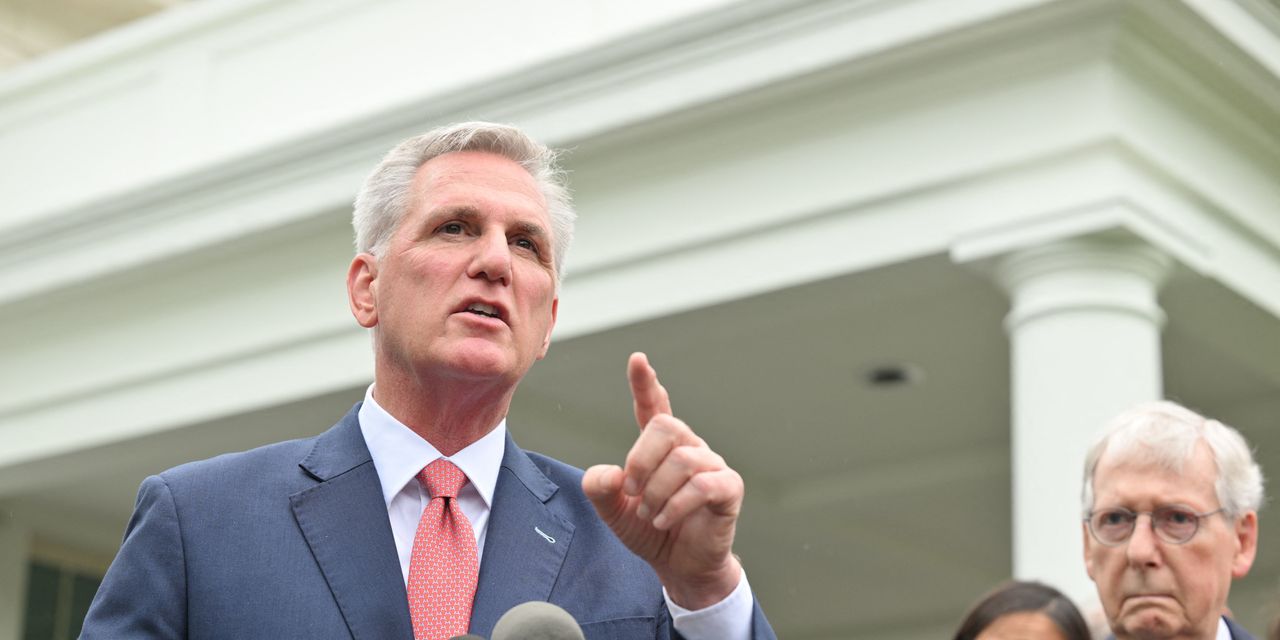
Their relationship could help the debt crisis now, as it did then. The real drama appears to be in the Republican-controlled House, where Speaker Kevin McCarthy is under ferocious pressure from the far-right to hold firm on spending concessions from the White House.
Where’s this headed? Think about the 2019 standoff. We’re on the eve of another presidential election, and Biden — like Trump then — wants to avoid anything that could upset the economy (note that Trump, now running for his old job, said on CNN recently that Republicans should force the government to default).
Read: Ray Dalio says debt-ceiling debate sets stage for ‘disastrous financial collapse.’
McCarthy was barely elected speaker back in January. It took a humiliating 15 votes and a series of concessions to MAGA hardliners to win. He risks their wrath by compromising with the White House now. On the other hand, a possible default could hurt Republicans too; their razor-thin House majority is in jeopardy next year.
As if rising rates, stubborn inflation, and a banking crisis aren’t enough, this Washington uncertainty is yet more reason for investors to remain cautious and firmly in a risk-off environment.
More: McCarthy says House could vote on debt-ceiling deal next week, as Schumer also sees progress
Plus:U.S. taxpayers are paying for yet another manufactured debt-ceiling crisis — and not for the last time
Read the full article here