




A new, bipartisan bill would update the rules for borrowers working in public service careers who apply for student loan forgiveness under a popular program.
The proposed change would remove a potentially significant barrier for borrowers who have met the requirements to receive student debt relief, but leave their public service jobs before receiving any loan forgiveness. The plan has broad support.
Here’s what borrowers need to know.
Student Loan Forgiveness By Working In Public Service Jobs
Public Service Loan Forgiveness, or PSLF, is a popular program that can provide student loan forgiveness for borrowers who work full-time for nonprofit or government organizations for 10 years or more. Borrowers must make 120 “qualifying” monthly payments to become eligible for debt relief. That is equivalent to 10 years of payments, although technically, the payments do not have to be made consecutively. There are many jobs that can qualify for PSLF, including employment with most domestically-based government and nonprofit organizations.
The PSLF program has been plagued by administrative and bureaucratic issues since its inception, however. Complex eligibility rules, poor implementation by loan servicers, and inadequate oversight by the Education Department across multiple administrations led to a shockingly low approval rate that, until recently, never exceeded 2%.
The Biden administration has implemented temporary fixes designed to remedy these longstanding problems. One, the Limited PSLF Waiver, has already resulted in over 650,000 public service borrowers receiving complete student loan forgiveness. Another, the IDR Account Adjustment, is ongoing, and additional relief is expected over the course of the next year.
In addition, new PSLF regulations will go into effect this July. The new rules will codify some of the flexibilities of the Limited PSLF Waiver and IDR Account Adjustment, and are designed to make it easier for public service borrowers to apply for and receive student loan forgiveness under the program.
Borrowers Must Be Working In Public Service Jobs Until They Receive Student Loan Forgiveness
One quirk of PSLF, however, is that in order to receive student loan forgiveness under the program, borrowers must remain employed in a qualifying job after they make their 120th qualifying payment and until they officially receive loan forgiveness.
“To be eligible for forgiveness, you must be employed full time by a qualifying employer at the time you make each of the 120 qualifying payments, when you apply for loan forgiveness, and when you receive loan forgiveness,” says the Education Department in official guidance. “Therefore, if you leave your job at a qualifying employer after meeting the PSLF eligibility requirements but before you apply for loan forgiveness, you won’t be eligible for forgiveness since you must be working for a qualifying employer both at the time you apply for forgiveness and the time you receive it.”
This can be a major problem for borrowers who, for various reasons, may need to leave their jobs or have already left. Borrowers may meet the PSLF program’s requirements by having worked for qualifying employers for 10 years or longer and making the requisite 120 qualifying payments, but could ultimately lose out on student loan forgiveness if they got laid off or left their job before their balances are discharged. It can take the Education Department months to process PSLF applications, and sometimes longer if there are problems or erroneous determinations. The rule also prevents borrowers from receiving PSLF benefits if they previously left public service work without realizing they could qualify for student debt relief, and now want to apply.
The Biden administration temporarily suspended this rule when it enacted the Limited PSLF Waiver. But that initiative ended last October. The IDR Account Adjustment extends many of the waiver’s benefits, but the rule requiring borrowers to remain in qualifying employment until receiving student loan forgiveness is back in effect.
New Bill Would Allow Borrowers To Receive Student Loan Forgiveness Through PSLF After Leaving Their Jobs
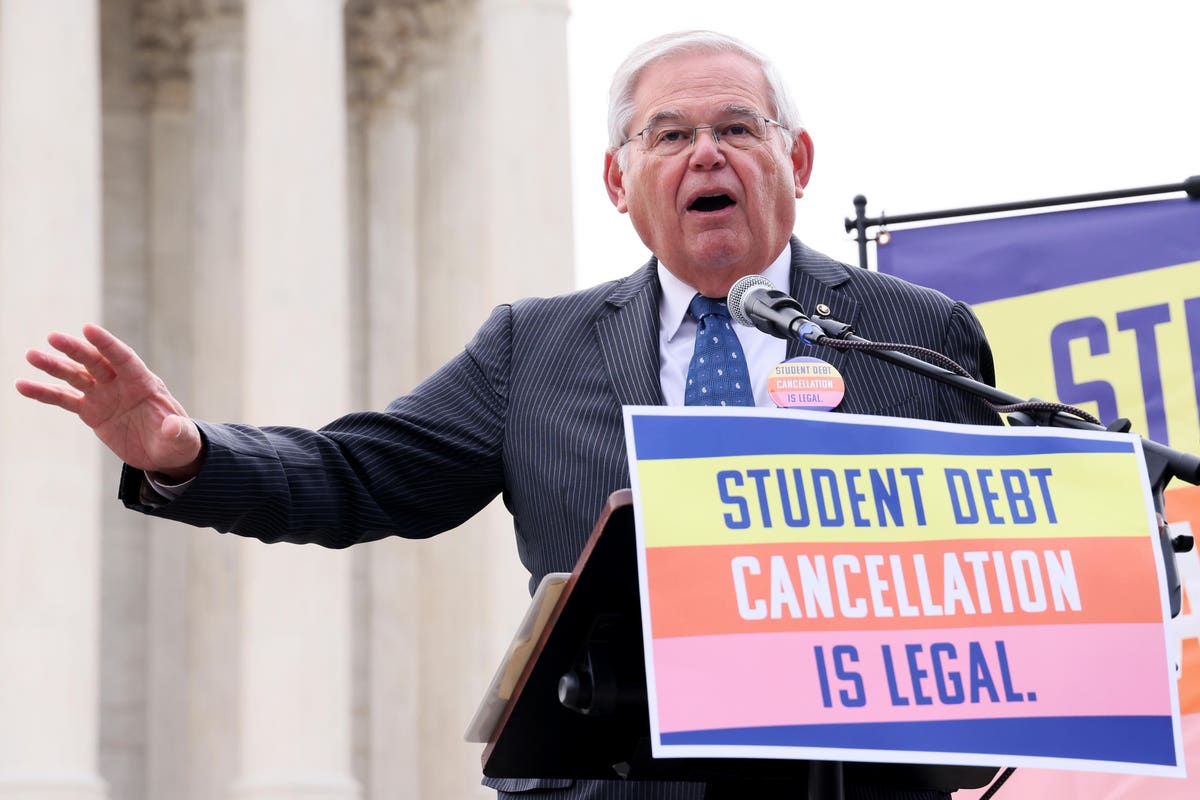
Last month, a bipartisan group of lawmakers unveiled the “PSLF Payment Completion Fairness Act.” The bill, sponsored by U.S. Senators Bob Menendez (D-N.J.) and Mike Braun (R-Ind.), as well U.S. Representatives Chrissy Houlahan (D-PA) and Brian Fitzpatrick (R-PA), would remove the requirement that borrowers remain employed in qualifying employment after their 120th PSLF payment until they receive student loan forgiveness.
“Since its creation, the Public Service Loan Forgiveness program has had persistent issues that have made it difficult for public service employees to access student debt relief in exchange for their dedicated service to our nation,” said Senator Menendez in a statement last month. “This is a common-sense, bipartisan solution that will remove a needless provision in federal law that will transform the lives of law enforcement, firefighters, teachers, and other public service employees by making it easier for them to receive relief under the PSLF program.”
“Public servants make a tremendous commitment to the communities they serve. Police officers, teachers, and first responders deserve access to the benefits that they’ve rightfully earned through years of service,” said Senator Braun. “That’s why I’m leading the effort to cut burdensome provisions in the Public Service Loan Forgiveness (PSLF) program and ensure that whenever they go next, their service isn’t forgotten.”
In addition to bipartisan support in Congress, the legislation also has broad support from a diverse array of advocacy groups including the Fraternal Order of Police; the American Federation of State, County and Municipal Employees; the International Association of Firefighters; and the American Federation of Teachers.
While the bill’s fate is uncertain at this time, the bipartisan and wide-ranging support signals the very real possibility that the legislation could pass, removing one more barrier for borrowers seeking student loan forgiveness.
Further Student Loan Forgiveness Reading
Huge Student Loan Forgiveness Decision Is Only Weeks Away — Key Details
Lowering Student Loan Payments Just Got Easier Amid Uncertainty Over Loan Forgiveness
Student Loan Forgiveness Eligibility Expanded In 3 Ways Under New Account Adjustment Guidance
$55 Billion In Student Loan Forgiveness Approved, Says Biden Administration — And More May Be Coming
Read the full article here