




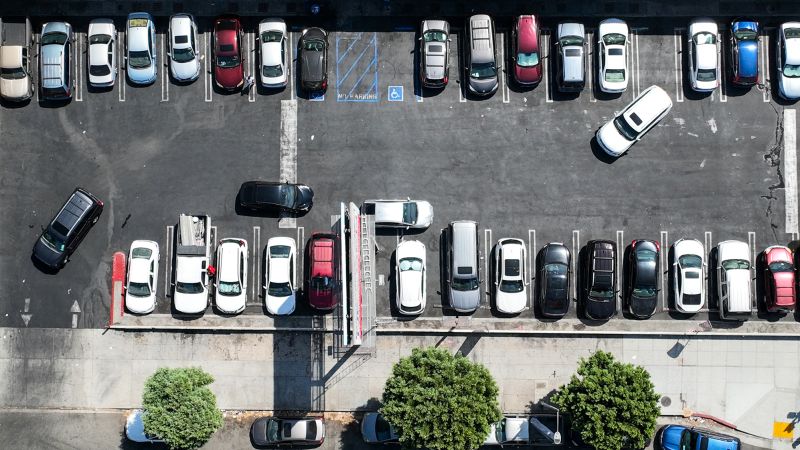
America is jammed with parking spots.
Approximately 2 billion parking spots cover the country, enough to pave over the entire state of Connecticut. From baseball stadiums in Los Angeles to malls in Atlanta, parking lots are bigger than the buildings they surround.
Cities have built so much parking through a policy few people know: minimum parking requirements. Cities don’t just require parking spaces for nearly every office, mall, store, movie theater, bowling alley, restaurant and other building, those requirements often include a certain number of spots for every building.
Mandatory parking minimums helped shape the modern makeup of America cities. They become a self-fulfilling prophecy, in effect. More parking spaces mean bigger parking lots. Bigger parking lots mean more buildings isolated from roads and sidewalks, separated from arterial infrastructure by vast oceans of asphalt. Faced with so much mandatory automotive-centric infrastructure, many people abandon walking and choose to drive.
Parking requirements have come with other downsides, and a growing number of cities and towns — in both Republican and Democratic-led areas— are now reforming their parking rules. The effort to end parking requirements has gained federal support as well.
In their zoning codes, many cities mandated that any new or re-purposed real estate projects include a minimum number of off-street parking spaces, often based on the size of the development or type of land use.
But now, US Rep. Robert Garcia, a Democrat from California, recently introduced a bill that would eliminate parking minimums for new affordable residential, retail, industrial and commercial construction. Separately, he introduced legislation to scrap parking requirements close to public transit.
Affordable housing, environmental and public transportation advocates say parking minimums reduce the supply of housing and raise costs. Developers often bundle the costs of parking in rent or housing prices.
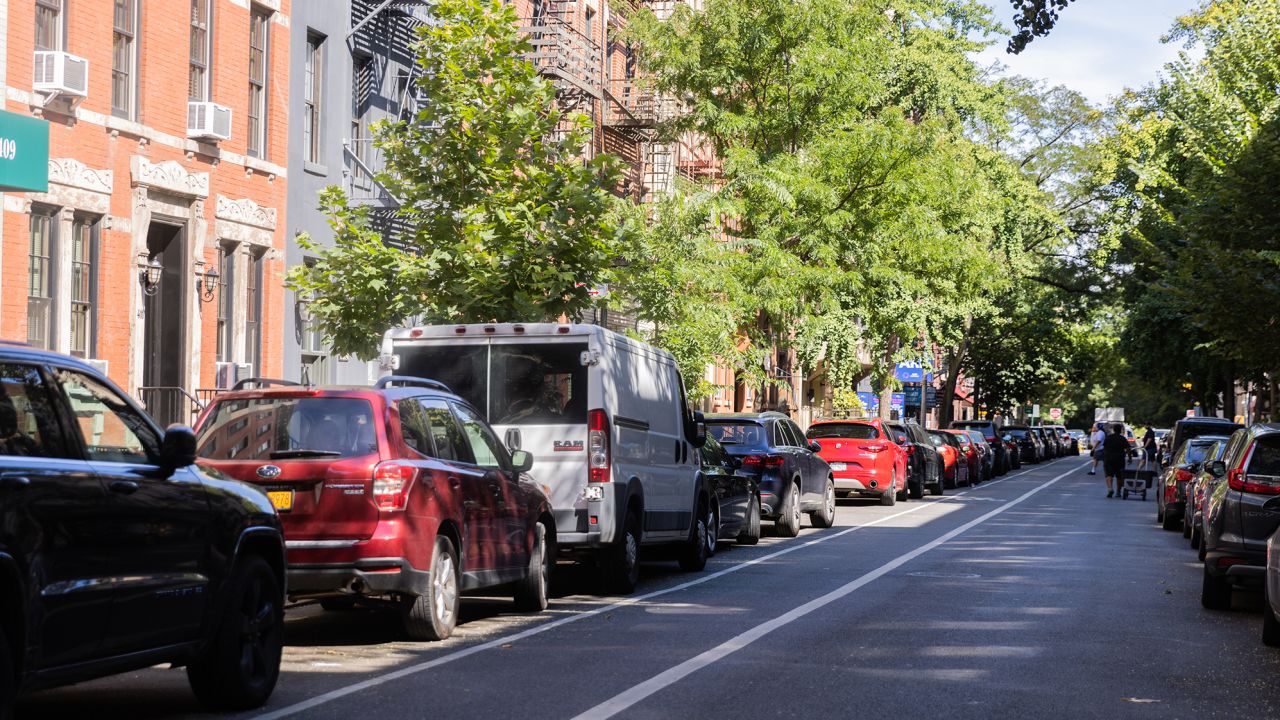
It costs about $28,000 to build a parking spot, according to WGI, a construction engineering company. Construction costs are highest in New York City, where it’s notoriously difficult to find a spot. A new parking spot in the city runs up to $36,000, not including the cost of buying the land.
Parking rules deter developers and businesses that can’t afford to construct the required parking, and spaces that could have held apartments have instead been swallowed up by parking mandates.
They also increase traffic congestion, carbon emissions and make cities less walkable, critics say.
And they are unequal because everyone pays for them — even people who don’t own or can’t afford a car.
“It damages the economy because everything everywhere has to include the cost of parking,” said Donald Shoup, a professor of urban planning at UCLA and an evangelist of anti-parking mandates. “It’s a long train of consequences.”
Parking requirements began a century ago.
By the 1920s, New York City, Los Angeles and other US cities were jammed with cars on the curbs. To manage this problem, cities began adding newly-invented parking meters in their densest areas, hoping to both keep the amount of cars to those who truly needed them, and to make some money at the same time. They also created off-street parking requirements for new buildings,
The mandates accelerated during the postwar period as more people drove, highways developed and suburbanization swept the country.
Minimum parking laws “spread faster than any other planning regulation ever has,” Shoup said. “They went from nowhere to everywhere.”
Policymakers, planners and developers designed cities and suburbs with the goal of providing everyone — even if they didn’t drive — ample places to park.
“Planners were responding to what people wanted without thinking there would be terrible effects in the long run,” he said.
The requirements were often arbitrary and puzzling, said Tony Jordan, the co-founder of Parking Reform Network.
A few examples Jordan has found: Tiny Woodbury, Georgia, population 905, has dozens of specific parking mandates, including for separate regulations for heliports and helistops. (Five spaces per helistop, and one per 1,000 square feet of heliports.)
SeaTac, Washington, requires one parking spot at butterfly and moth breeding facilities for every 150 square feet of office or retail space.
And Dallas requires one parking space for every million gallons of capacity at a sewage treatment plant, but two parking spaces for a water treatment plant.
“Take a sample of any 10 municipalities almost anywhere in the country and you’ll find a similar set of contradictions and headscratchers,” Jordan said.
In Shoup’s influential 2005 book, “The High Cost of Free Parking,” he recommended that cities should remove off-street parking requirements, charge demand-based prices for curb parking – the lowest prices that will leave one or two open spaces on each block to alleviate parking shortages – and spend the meter revenue to improve public services.
His ideas are having a moment.
Last year, 11 cities ended their minimum parking mandates, including Raleigh, Anchorage and Lexington, Kentucky, according to the Parking Reform Network, a nonprofit group that researches and advocates for parking policy changes.
California became the first state to pass legislation ending parking minimums for new developments close to public transit.
Four cities have ended them so far in 2023, including Richmond, Virginia.
“The parking minimums have contributed to urban sprawl, lack of abundant and affordable housing, and automobile dependency,” said a staff report by Richmond’s Department of Planning.
Richmond and other cities will allow property owners to decide how much parking to add in their proposed developments, allowing market forces to determine how many parking spots are needed.
Some cities, including Nashville, are moving in the exact opposite direction of parking minimums, creating maximum parking requirements that cap the number of spots developers can build.
Cities are looking for ways to reinvent their public spaces after the damaging impact of the pandemic. They also face a lack of affordable housing.
Scrapping minimum parking requirements could help both challenges. Instead of developers setting aside land to build parking, it could be turned into smaller apartment complexes, advocates say.
In Buffalo and Seattle, which ended parking minimums in 2017 and 2012 respectively, nearly 70% of new homes built after parking reforms would not have been allowed under the previous rules, according to research from Sightline Institute, a non-partisan sustainability advocacy group.
In Buffalo, developers built less parking than previously required and made parking an amenity, charging individual users fees rather than bundling it into rent or housing prices, researchers at the University at Buffalo found.
Seattle developers built 40% less parking than would have been required prior to the reforms, resulting in 18,000 fewer parking spaces, researchers at Santa Clara University found.
“These findings highlight the impact that policymakers can have by reducing or eliminating off-street parking requirements,” the researchers said.
A better policy, Brookings Institution researchers said in a 2020 report on parking minimums, would be to let developers and businesses decide how much off-street parking to build.
In places where demand for parking is high, developers will choose to build spots, the researchers predict.
But in places with an oversupply of parking spots and a shortage of affordable housing, they say, “parking minimums are 20th century relics that deserve to be retired.”
Read the full article here