




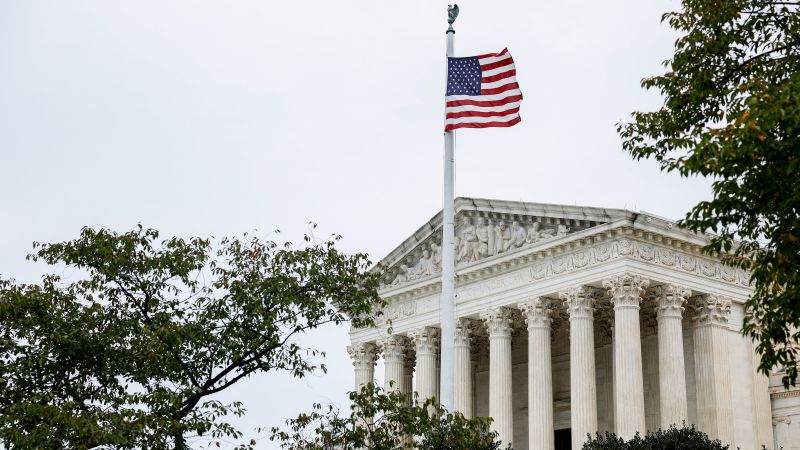
When the Supreme Court ruled against the federal agency that protects consumers from financial scams in 2020, it let the agency keep operating, opting for “a scalpel rather than a bulldozer in curing the constitutional defect.”
The question now is whether the justices are ready to employ the bulldozer as part of the conservative supermajority’s drive to limit regulatory power.
In recent years, the Supreme Court has moved aggressively against the executive branch, invalidating rules for power-plant carbon emissions, Covid-19 precautions and student loan forgiveness. The court has agreed to hear a series of new cases in the 2023-24 term that could reinforce its anti-regulatory direction.
Tuesday’s case tests the funding structure of the Consumer Financial Protection Bureau, which Congress established in the wake of the 2008 financial crisis to oversee laws that target predatory lending and other financial abuse. Millions of Americans lost their homes, jobs or savings in that Great Recession.
A ruling against the CFPB this time has the potential to unravel more than a decade of actions by the agency. The decision could also open the door to challenges to other agencies, such as the Federal Reserve, that received separately authorized funding, rather than traditional annual appropriations from Congress.
Additional regulatory cases to be heard in the new 2023-24 session cover when judges must defer to agency interpretations of their statutory power (a theory of deference arising from the 1984 case of Chevron v. Natural Resources Defense Council) and whether the Securities and Exchange Commission can use in-house administrative law judges to resolve civil-penalty disputes without violating the constitutional right to a jury trial.
As conservative justices warn of an expanding bureaucracy overtaking businesses and individual lives, liberal justices highlight agency expertise to address societal concerns including the environment, public health and consumer choices.
Writing for the majority in the first CFPB case, Chief Justice John Roberts derided the bureaucracy with a line he’d first expressed in a 2010 controversy over regulatory authority: “One can have a government that functions without being ruled by functionaries, and a government that benefits from expertise without being ruled by experts.”
Dissenting Justice Elena Kagan countered by referring to the “financial chicanery” the CFPB was intended to address, saying, “Diverse problems of government demand diverse solutions. They call for varied measures and mixtures of democratic accountability and technical expertise, energy and efficiency.”
The effort to scale back the so-called regulatory state has drawn more public attention because of news reports connecting individual justices to wealthy business interests invested in this line of cases. ProPublica recently revealed Justice Clarence Thomas’ dealings with the conservative libertarian Koch network, founded by Charles and David Koch, including Thomas’ attendance at a 2018 summit with Koch donors in Palm Springs, California.
Lawyers with Cause of Action Institute, a Koch-affiliated entity, initiated the challenge to the Chevron precedent requiring judges to generally defer to agency interpretations of their federal power. The case, Loper Bright Enterprises v. Raimondo, tests a National Marine Fisheries Service mandate that the fishing industry pay the cost of onboard observers monitoring catches and compliance with fishery management plans.
Another Koch entity, Americans for Prosperity Foundation, has entered the CFPB case as an amicus curiae, siding with the payday lenders suing the Bureau and underscoring its sweeping powers over mortgages, car payments, credit cards and student loans.
Thomas has declined to comment on the ProPublica report or calls to recuse himself from cases.
A ruling in the new CFPB case could go further to unsettle its operations than in 2020 because it challenges the bureau’s overall funding and every decision made under that funding system.
(The prior case tested the CFPB leadership structure: Congress said its director could be removed only “for cause,” such as neglect of duty or malfeasance; the high court found that the standard unconstitutionally encroached on executive authority and said the director must be removable at the will of the president.)
The current dispute arises from another section of the 2010 law passed to safeguard the CFPB’s independence. Congress specified that the CFPB would receive funding from the combined earnings of the Federal Reserve System each year, up to a statutory cap of about $600 million, adjusted for inflation.
The payday lending groups targeted that funding arrangement as they sued over a CFPB rule that limited a lender’s ability to obtain loan repayment through preauthorized account access. The rule prohibits attempts to withdraw payments from accounts after two consecutive tries have failed due to insufficient funds. (Repeated withdrawal attempts can subject borrowers to extra banking fees.)
A US district judge upheld that regulation and rejected the claim that bureau’s funding mechanism impinged the Constitution’s appropriations clause, which says, “no Money shall be drawn from the Treasury, but in Consequence of Appropriations made by law.” The judge said the statute authorizing the agency to receive certain funding met the constitutional demand.
The 5th US Circuit of Appeals reversed. It said the Constitution gives Congress “exclusive power over the federal purse” and Congress cannot cede that power.
“The Appropriations Clause … does more than reinforce Congress’s power over fiscal matters,” the appellate panel wrote last year. “(I)t affirmatively obligates Congress to use that authority to maintain the boundaries between the branches and preserve individual liberty from the encroachments of executive power.”
The 5th Circuit, which also declared all prior CFPB rules invalid, has produced some of the most sweeping rulings against the Biden administration over the past three years. But the circuit has also experienced reversals at the Supreme Court, and it will soon be seen whether the 5th Circuit has gone too far in this novel dispute over the appropriations clause, or rather has teed up a case for one of the most consequential rulings in years.
Solicitor General Elizabeth Prelogar, appealing on behalf of the CFPB, says no other court has so narrowly interpreted the appropriations clause, “nor has a court previously approved a similarly sweeping theory of retrospective relief, which threatens profound disruption by calling into question virtually every action the CFPB has taken in the 12 years since its creation.” Other federal courts have specifically upheld the CFPB funding mechanism.
Prelogar said the Constitution leaves it to Congress to determine the source of appropriations once spending authority is designated, and she noted that Congress has designated such lump-sum appropriations for the Federal Reserve Board and Office of the Comptroller of the Currency, among other independent agencies.
Lawyer Noel Francisco, who was the Trump administration US solicitor general and is now in private practice, will return to the lectern. He is representing the Community Financial Services Association of America, which objects to the CFPB rule regulating lenders’ attempts to withdraw loan repayments from bank accounts.
Francisco argued in his brief that Congress “abdicated” its role in appropriations and violated core principles of separation of powers when it passed the law allowing the CFPB to draw funds annually from the Federal Reserve System.
“This case is about checks and balances,” Francisco wrote. “The Appropriations Clause gives Congress, and therefore the People, the ability to protect the federal fisc and restrain Executive authority. Frustrated with the separation of powers, however, the 2010 Congress crafted the CFPB to operate free of any political accountability, including fiscal oversight.”
As the court indeed rejected that structure, Roberts offered some thoughts – tangential then, perhaps relevant now – regarding the lack of direct congressional appropriations and continued separation-of-powers concerns.
“The CFPB’s receipt of funds outside the appropriations process further aggravates the agency’s threat to Presidential control,” Roberts wrote in Seila Law v. CFPB. “The President normally has the opportunity to recommend or veto spending bills that affect the operation of administrative agencies.” He added that such “financial freedom” could lead the CPFB to “slip from the Executive’s control, and thus from that of the people.”
Read the full article here