




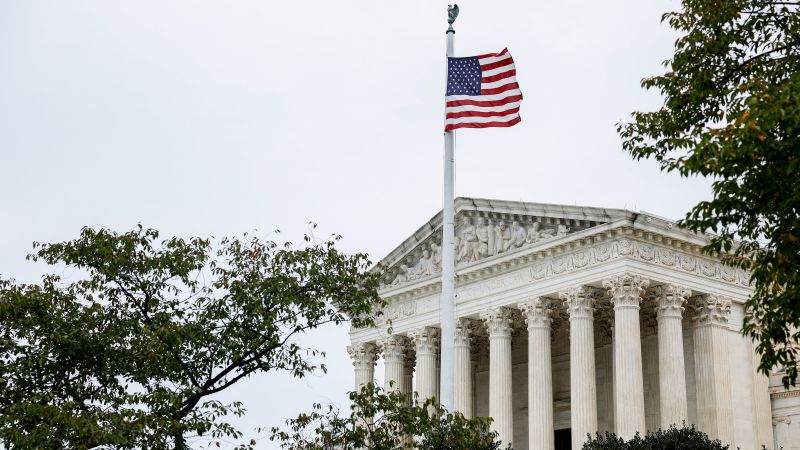
The Supreme Court will consider the strength of the Americans with Disabilities Act on Wednesday when it hears a dispute over whether a self-appointed “tester” of the civil rights law has the right to sue hotels over alleged violations of its provisions.
How the justices rule could have a significant impact on the practical effectiveness of the landmark legislation, which aims to shield individuals with disabilities from discrimination in public accommodations and a host of other settings.
At the center of the dispute is Deborah Laufer, a disability rights advocate who has brought hundreds of lawsuits against hotels she says are not in compliance with ADA rules requiring hotels to disclose information about how accessible they are to individuals with disabilities.
Laufer, a Florida resident who uses a wheelchair and has a visual impairment, doesn’t intend to visit the hotels she’s suing. Instead, the complaints are made in an effort to force the hotels to update their websites to be in compliance with the law. Legal experts say the strategy, known as “testing,” is necessary to ensure enforcement of the historic law.
Among Laufer’s suits is a complaint from 2020 against Acheson Hotels, which at the time owned the Coast Village Inn and Cottages in Wells, Maine. Though Acheson later sold the hotel while the case was percolating in lower courts, the company remained a defendant in the lawsuit.
A district court dismissed Laufer’s complaint against the company, ruling that because she never intended to visit the hotel and she didn’t suffer the type of injury needed to bring her case. But an appeals court later ruled in Laufer’s favor, saying that her lawsuit could proceed because she experienced an “informational injury” as a result of the hotel’s lack of accessibility information.
“Laufer is a person with disabilities – not just any one of the hundreds of millions of Americans with a laptop – and personally suffered the denial of information the law entitles her, as a person with disabilities, to have,” the appeals court ruled.
Despite her victory at the appeals court, Laufer’s attorneys at the time urged the justices to take up the case when Acheson turned to the high court earlier this year. They asked the justices to rule in her favor and affirm the legal footing the lower court said testers like her are on, writing in court papers, “Without civil rights advocates such as this plaintiff, there would be no enforcement of the ADA.”
But this summer, Laufer dropped all her pending lawsuits against hotels, including the Acheson case, after one of her attorneys in some of the cases was professionally disciplined, saying she was worried it would “distract” from her advocacy work. She asked the justices to drop the case before them, but they declined her request and said they would consider her position that the case is now moot during oral arguments.
In addition to that, Acheson also claims the case was rendered moot after the hotel updated its website to note that it doesn’t provide ADA-compliant lodging. The justices are expected to consider Wednesday whether, under these circumstances, there is still a live issue at play that warrants their consideration of the standing questions.
Attorneys for Acheson made a flurry of legal arguments in briefs submitted to the court, chief among them that Laufer could not have suffered an “informational harm” since she did not intend to visit the Maine hotel and therefore did not need to access information about the facility’s accessibility.
The company also says that it’s the executive branch’s duty, not Laufer’s, to enforce the ADA.
“Laufer may feel that the Justice Department is doing a poor job enforcing its regulations. But it is not her job to take matters into her own hands,” they wrote.
Laufer’s attorneys have said that her efforts to test the ADA’s rules are akin to those of African Americans who have tested key civil rights protections over the years, pointing to a 1982 Supreme Court case called Havens Realty Corp. v. Coleman that the appeals court invoked when it ruled in her favor.
In that case, the court ruled unanimously in favor of a Black woman who sought to test the Fair Housing Act. The justices said that the woman had standing to sue a landlord for alleged racial discrimination even though she had no intention of renting from them.
Her attorneys have also argued that she suffered a “dignitary harm” that gave her standing to bring her lawsuit against the hotel company, saying that alleged harm “is no different than if Acheson had a practice of ignoring the existence of wheelchair users who approach the reservation desk in its lobby.”
Passed in 1990, the Americans with Disabilities Act has been a critical federal civil rights law for millions of Americans.
The statute mandates public places make “reasonable modifications” to accommodate people with disabilities, and an Obama-era rule at the center of the Supreme Court case requires hotels to describe “in enough detail” how accessible their facilities are “to reasonably permit individuals with disabilities to assess independently whether a given hotel or guest room meets his or her accessibility needs.”
The Biden administration told the justices that the appeals court erred when it ruled in Laufer’s favor, saying instead that it believes she would have had standing to bring her lawsuit against Acheson only if she went a step further than she did when using the online reservation system, like booking a room or staying at the hotel.
The Obama-era rule, DOJ attorneys wrote in court papers, “protects individuals with disabilities who are using or seeking to use a hotel’s reservation service – that is, individuals who are making, or considering whether to make, a reservation.”
“But the Rule does not confer an informational right on every individual with a disability who merely visits the hotel’s website without using or attempting to use the reservation service,” they said.
A number of groups weighed in on behalf of Laufer, including a group of disability rights legal scholars, who stressed to the justices that “ADA enforcement would be severely undermined without private enforcement, including by testers like Ms. Laufer.”
The scholars argued that individuals with disabilities who encounter non-compliant websites suffer a host of harms that give them standing to sue.
“The harm you suffer just wading through unusable online booking services – whether or not you ever manage to make a reservation – is real and compounding, inflicting practical and dignitary harms in ways the ADA was designed to prevent and remediate,” they wrote.
The Chamber of Commerce and several other business groups, however, urged the justices to side with Acheson and rule unlawful Laufer’s tester strategy, which they described as “abusive litigation tactics” that result in costly court proceedings.
“Small businesses are disproportionately harmed by these litigation tactics, and often settle lawsuits of even questionable merit to avoid litigation expenses and a judgment that would throw them into bankruptcy,” they wrote in briefs, arguing that Laufer and similar testers “have developed a litigation industry that intentionally flirts with the boundaries of standing doctrine.”
Read the full article here